
A flag’s silhouette can make as much difference as its message. Custom teardrop flags for outdoor events offer a distinctive, compact display, with assembled heights commonly ranging from 7 feet to 13.5 feet. Their curved profile gives your branding a clear shape in busy event settings.
Choosing the right flag involves more than picking a graphic. The event surface determines the base, the viewing direction informs the artwork, and the flag style shapes how the display reads from a distance. Teardrop and feather flags each create a distinct profile, so choose based on the space and the impression you want to make.
This guide explains why teardrop flags work well for outdoor promotions and how to choose a base, prepare artwork, and plan assembly. It also compares teardrop and feather styles to help you select the right flag for your event display.
Key Takeaways
- Match flag height and placement to the event setting so your display is visible without overwhelming the space.
- Choose a spike for soft ground or a cross base with added weight for hard, flat surfaces.
- Plan artwork around viewing direction: single-sided graphics appear reversed from the back, while double-sided printing suits visibility from multiple directions.
- Understand how the pole sections connect and how the flag fits over the assembled frame before event day.
- Compare the curved teardrop silhouette with the feather style to choose the shape that best supports your display goals.
Why Choose Custom Teardrop Flags?
Custom teardrop flags for outdoor events combine a curved profile with branding visible above booths and entrances. Four standard sizes offer assembled heights from 7 feet to 13.5 feet.
Event and Business Applications
At a registration tent, a flag can mark the entrance before guests reach the table. Businesses can also use one near storefronts, event booths, or promotional areas to distinguish their space. Choose the height according to sightlines, nearby displays, and available room. For event layouts that include a life-size cutout, this life-size cutout planning guide covers another visual display option.
Use the design to highlight a logo, short message, or directional cue. Keep the main element easy to recognize from the approach path. A flag works best as a visual marker, not as a replacement for event signs carrying detailed information.
Permit requirements depend on the venue and local rules. Before setting up, ask the event organizer or relevant park or city office whether outdoor flags need approval.
Flag Shape and Wind Performance
The teardrop’s curved outline follows the pole, giving the graphic a tall, tapered presentation. Its distinctive silhouette can help a display stand out from rectangular banners at a busy event. Consider the viewing angle and nearby signs when choosing where to place the flag.
A teardrop feather flag is suitable for winds up to 25 mph (40 km/h). Take it down during high winds or severe weather. Weather performance also depends on using the correct base for the surface, which the next section explains.
Weather resistance comes from the flag’s 4 oz polyester fabric and printed graphic. The fabric is washable, but outdoor exposure still calls for sensible care. Avoid leaving the flag assembled in severe weather.
Flag Sizes and Stand Height
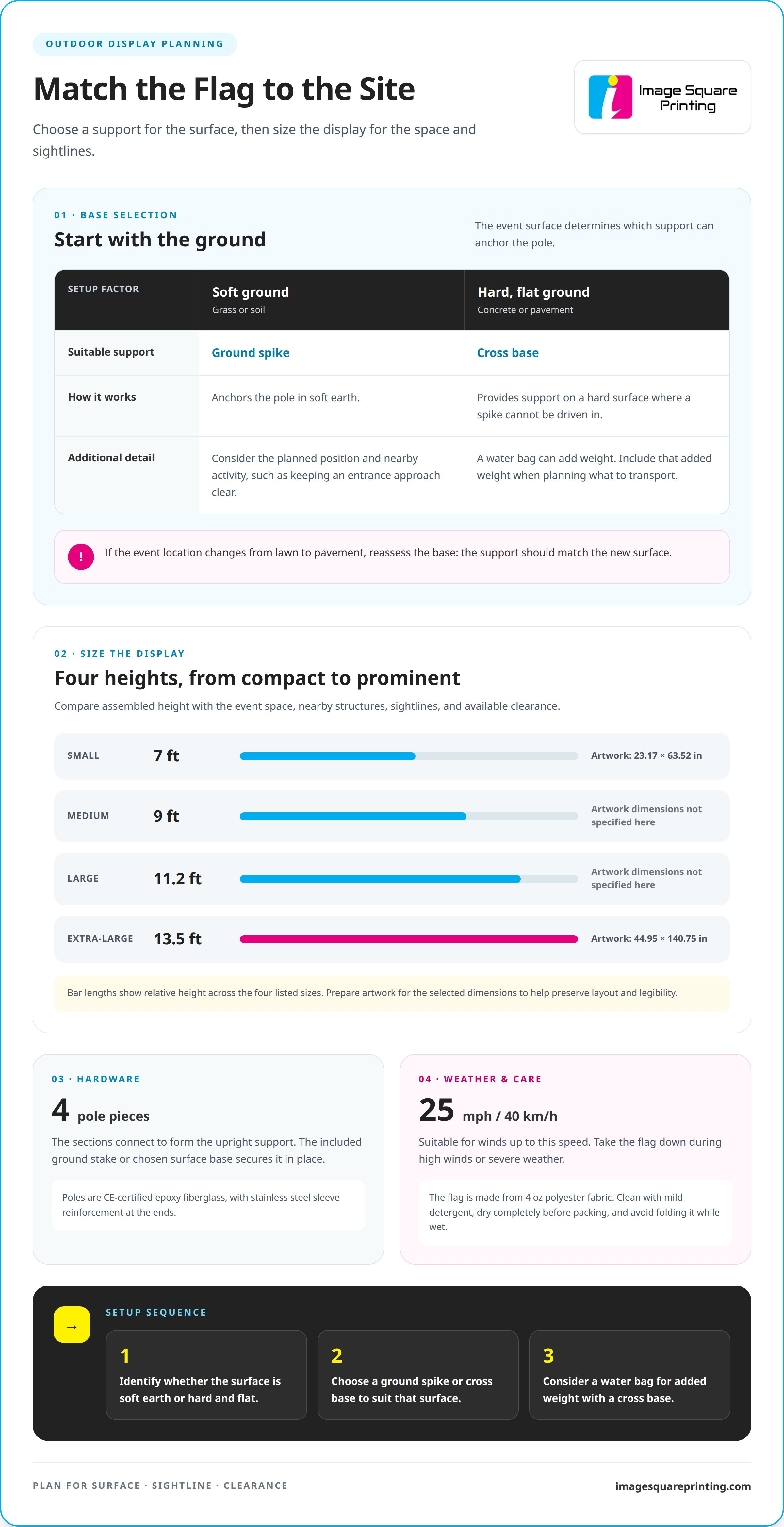
Choose a size by comparing assembled height with the event space and nearby structures. The small flag stands 7 feet tall; medium reaches 9 feet. Large stands 11.2 feet, while extra-large reaches 13.5 feet.
Different heights help the display stand out among tables, tents, and signs. A smaller option may suit a tight space, while a taller flag can rise above a booth. Measure the available clearance before selecting a size.
Artwork dimensions also change by size. Small graphics measure 23.17 by 63.52 inches; extra-large graphics measure 44.95 by 140.75 inches. Upload artwork prepared for the selected dimensions to preserve layout and legibility.
Flag and Hardware Weight
These figures help estimate the display’s carrying load, but the base adds weight separately.
Clean the flag with mild detergent and let it dry completely before packing. Don’t fold it while wet, as moisture can affect print quality. Store the flag and pole sections together between events so the complete display is ready for the next setup.
How a professional helps clients choose bases and ground spikes
Start by considering the surface where the flag will stand. A professional can help match the base to the venue ground, display position, and surrounding event structures.
Outdoor Pole and Ground Stake Options
For grass or soil, a ground spike anchors the pole in soft earth. First identify the planned placement, then match the support to the surface. For example, a flag beside a lawn-side entrance may use a spike, while one on a concrete walkway needs a different base.
The surface matters because one support won’t suit every venue. Ground spikes work in grass or soil, while cross bases suit hard, flat surfaces such as concrete. Matching the base to the ground helps ensure it can be positioned appropriately.
Also consider visibility and surrounding activity. A flag near registration, for example, needs a base suited to the surface that won’t block the approach. If the event layout shifts from lawn to pavement, the base should suit the new location.
Ground Stake and Pole Hardware
Teardrop flag pole sets consist of four pieces and include a ground stake. The pole sections connect to form the upright support, and the chosen base anchors it to the event surface. A professional reviews these components together so the support matches the planned setup rather than treating the pole and base as unrelated parts.
For hard surfaces, a cross base provides support, while a water bag adds weight. This combination is worth considering on concrete, where a ground spike cannot be driven into the surface. The extra weight also affects what needs to be transported.
Pole construction is another hardware consideration. Teardrop flag poles are CE-certified epoxy fiberglass, with stainless steel sleeve reinforcement at the ends. The pole assembly provides the upright support; the ground stake or surface base secures it in place. Keeping these roles clear helps match the setup to the venue.
Before setup, follow a simple decision sequence: identify whether the ground is soft earth or hard and flat, select a spike or cross base accordingly, then consider whether a water bag should add weight. This helps match the hardware to the surface instead of assuming every event site is alike.
For a display beside a trade show display, the layout also matters: the flag’s base should fit its assigned position and keep the graphic visible. Share the surface type and planned placement with the professional; those details guide a suitable base recommendation.
Professional design customization and artwork preparation
Custom artwork should suit the flag’s curved shape and the event’s purpose. A production professional can help position the logo and message for the intended viewing direction before printing.
Custom Designs, Logos, and Artwork
Start by identifying the graphic’s main purpose: identify a business, guide visitors, or promote an event. A registration flag might prioritize a short directional message, while a storefront display might lead with the business logo. Decide what viewers should notice first.
Arrange the artwork to suit the tapered outline. A logo too close to an edge can compete with the shape, while a concise message keeps the design focused. A professional can review supplied files, adjust the layout, and prepare a proof for approval before production.
The viewing direction affects the final design. On a single-sided flag, text, logos, and directional graphics appear reversed from the other side. This is a mirrored image, not traditional double-sided printing. When visitors approach from multiple directions, double-sided printing is recommended.
Before approving a proof, review the logo, spelling, contrast, and message hierarchy. Check that the key information is clear at a glance. For example, place the event name above a short direction rather than crowding the design with competing messages.
Custom Flags and Banners
Custom flags and banners can share a visual system without repeating identical layouts. A flag can carry the event name or a directional cue, while a banner presents supporting information. Giving each display a distinct role helps visitors identify the event space.
Coordinate colors, logo placement, and typography across formats. For example, use the same logo treatment on a flag and entrance banner while tailoring the wording to each location. Upload the final artwork and note where each piece will be displayed.
For a pop-up tent display, plan the flag as part of the complete booth view. The tent marks the event area, while a flag can help identify its approach side. A professional can review the graphics together so the logo remains consistent and each message stays legible in its own position.
During design review, share the tent’s intended placement, the flag’s viewing direction, and the event’s key message. These details help resolve layout decisions before printing. The final proof should show the selected artwork and confirm whether the design is single-sided or double-sided.
Professional assembly and installation options
A teardrop display combines connected pole sections with a fabric graphic. Planning the assembly around the venue, surface, and event schedule can help avoid last-minute adjustments. Identify the flag’s location, selected base, and who will handle setup.
The pole set consists of four pieces and includes a ground stake. Snap the pole sections together, then slide the flag over the assembled pole. This straightforward sequence helps event teams understand the basic setup before moving the display to its assigned position.
For a smooth handoff, clarify these details before event day:
- Location: Identify the flag’s position beside a booth, entrance, or registration area.
- Surface: Note whether the installation point is grass, soil, concrete, or another hard surface.
- Graphics: Confirm the correct flag is paired with its pole and base.
- Timing: Include setup in the event schedule, rather than leaving assembly until guests arrive.
These details connect the assembly sequence with the installation conditions. A flag planned for a lawn entrance needs its ground stake at that location; a concrete-side display requires a cross base instead. Keeping the support and placement plan together reduces confusion when event materials arrive separately.
Plan transportation as well. Teardrop flags are described as lightweight and easy to transport, and the pole sections separate for packing. Keep the graphic with its corresponding hardware, and protect the printed fabric from dirt and moisture. For a multi-stop promotion, grouping each display’s components makes them easier to locate at the next venue.
Consider the viewing direction before positioning the flag. A single-sided graphic appears reversed from the other side, so orient it toward the main approach path. If visitors approach from several directions, the double-sided option may suit the placement better.
Finally, include weather in the installation plan. Teardrop flags are suitable for winds up to 25 mph (40 km/h), and should come down during high winds or severe weather. The event lead can make the removal decision based on conditions at the site. After the event, clean the flag with mild detergent, let it dry, and avoid folding it while wet. A consistent pack-down process helps protect the print and keeps pole components together for the next setup.
Teardrop flags compared with feather flags
Compare silhouette, message layout, and placement when choosing between teardrop and feather flags. A teardrop has a curved, tapered outline, while a feather flag has a more elongated, feather-like profile. Even with the same logo, the shapes create different visual impressions.
The teardrop’s rounded top gives artwork a contained area that can suit a bold logo or brief event message. A feather flag has a different vertical shape, so the same artwork may need a revised layout. For example, a wide logo that fills the teardrop’s upper area may need repositioning on a narrower-looking graphic.
Begin by considering the viewing location. At an outdoor entrance, decide which silhouette will stand out among nearby signs and structures. At an indoor exhibit, consider overhead clearance, booth spacing, and visitor approach. Choose the shape that reads clearly in that setting.
Then assess the message. A short business name or event identifier works well when recognition is the goal. A directional instruction needs enough space and contrast to remain legible from the approach path. Have the design professional adapt the artwork to each flag outline instead of stretching one file across both styles.
Wind suitability is another practical distinction to discuss during selection. The available fact for teardrop feather flags is suitability for winds up to 25 mph (40 km/h); take the display down during high winds or severe weather. Don’t assume that a different outline changes safe use. Match the flag’s placement and setup to site conditions.
Use this quick comparison process:
- Identify the setting: Note whether the display sits outdoors, indoors, beside a tent, or near an entrance.
- Define the message: Decide whether viewers need a logo, event name, or directional cue.
- Review the shape: Compare how the graphic fits each silhouette and viewing angle.
- Plan placement: Consider surrounding displays, approach routes, and available clearance.
For example, an outdoor event with a compact logo and clear approach path may suit the teardrop’s curved profile. A space where a longer, feather-like shape fits the visual layout may favor a feather flag. Let the graphic and setting guide the decision, not the style name alone.
Before production, compare proofs showing the same message adapted to both outlines. Reviewing them side by side makes differences in logo scale, spacing, and readability easier to judge. Choose the version that communicates the event identity clearly from its intended viewing direction.
Image Square Printing
Image Square Printing helps you plan cohesive event graphics around your display goals. If your event needs more than a flag, complementary pieces such as retractable banner stands, Step and Repeat Backdrops, and Table Covers can support a consistent visual presentation. Choose each piece according to its role, such as welcoming guests, identifying a booth, or creating a branded photo area.
Bring your event setting, artwork, and intended message into the planning conversation. Those details help shape a coordinated display that suits the space and audience, without forcing every graphic into the same format. For event display planning, large-format printing can bring related visual elements together.
Contact Image Square Printing to discuss your event display needs.
Shape Your Event Display Around the Experience
A polished plan for teardrop flags for outdoor events starts with the experience you want guests to have. Consider how the display will work with other branded elements, from arrival through the main activity. A coordinated visual system can make the space feel intentional without asking every graphic to carry the same message.
Image Square Printing supports broader event displays with options including Retractable Banner Stands, Custom wallpaper printing, and Custom wall covering. These formats can extend a visual identity across event signage and interior surfaces, complementing the display plan without duplicating the flag’s role.
Bring your event goals and visual direction into the next planning conversation. A clear idea of the audience, setting, and message helps guide the right supporting graphics. Contact Image Square Printing today to discuss your event display plans and take the next step with confidence.
Frequently Asked Questions
What are teardrop flags and how are they used at outdoor events?
Teardrop flags are tall fabric displays with a curved, tapered outline, used to identify event spaces and businesses. At an outdoor market, one can mark a vendor’s entrance, while another can guide guests toward registration. Their vertical format is useful where ground-level signs compete with tables or foot traffic. When choosing teardrop flags for outdoor events, consider the viewing route and the message visitors should notice first.
What teardrop flag sizes are available, and which size works best outdoors?
Common assembled heights are 7 feet, 9 feet, 11.2 feet, and 13.5 feet, from small through extra-large. The best fit depends on clearance, nearby displays, and viewing distance. A smaller flag may suit a narrow entrance, while a taller one can stand out near a larger event area. Match height to the site, and consider whether nearby tents or signs could obscure the graphic.
Which base should a professional recommend for teardrop flags on grass, pavement, sand, or indoors?
A ground spike suits grass or soil, while a cross base suits hard, flat pavement. A water bag can add weight to a cross base. On sand, choose support suited to the actual ground, and don’t assume every soft surface behaves like firm soil. Indoors, use a base designed for hard surfaces on a level floor, away from walkways.
What assembly and installation support can a teardrop flag provider offer?
Professional support can clarify which pole sections, graphic, and base go together and explain the setup sequence. Connect the four-piece pole set before sliding the fabric over the assembled frame. For events with several display locations, grouping components clearly can reduce setup confusion. The installation plan should account for the surface, approach direction, and space around the flag.
How well do teardrop flags withstand wind, rain, and sun?
Teardrop flags use washable polyester fabric, and mild detergent can clean the graphic. Take the flag down during severe weather, and don’t store it folded while wet. Sun exposure can affect printed materials over time, so dry and store the flag between events to help protect its appearance. Consider the forecast and display location when planning outdoor use, rather than leaving the flag exposed after the event.
What wind speeds are safe for using teardrop flags, and when should they be taken down?
Teardrop feather flags are suitable for winds up to 25 mph (40 km/h). Take them down during high winds or severe weather, rather than relying on the base alone. At an outdoor event, assign someone to monitor conditions and remove the flag if weather worsens. This is especially relevant when the display sits near a busy entrance, where a shifting flag could disrupt event traffic.
How do teardrop flags compare with feather flags and retractable banners?
Teardrop and feather flags are both tall fabric displays, but their silhouettes differ: teardrops have a curved, tapered shape, while feather flags have an elongated profile. A retractable banner has a more rectangular graphic and stores its panel in a base. Choose based on placement and message: a flag can mark an outdoor approach, while a banner may suit a controlled display area.
What artwork should clients supply for a custom teardrop flag?
Prepare the logo, exact wording, brand colors, and intended viewing direction. A concise message is easier to read on a tall, shaped graphic than dense copy. Note which element should stand out, such as a logo for a booth or a directional cue for an entrance. A design professional can adapt the layout to the flag shape and review the proof before printing.