
Your storefront isn’t just a window; it’s a high-stakes visual handshake that determines whether a passerby becomes a customer or keeps walking. In a competitive market where the global retail display industry is surging toward a $15.4 billion valuation, simply looking nice isn’t enough to capture attention. You’ve likely felt the frustration of watching potential shoppers stroll past your prime location because your presentation lacks that professional edge. It’s a common challenge to find retail window display ideas that look sophisticated, withstand harsh sun exposure, and actually convert sidewalk traffic into store entries.
We understand that your brand deserves a presence that reflects its true value. This guide provides the strategic blueprint you need to master the art and science of high-impact storefronts. We’ll explore the concept of Visual Architecture, which is a method of layering depth and high-performance materials to create a sense of brand prestige. From choosing the right window decals to integrating sustainable elements and bold LED lighting, you’ll learn how to build a durable, professional display that commands respect. We’re moving beyond basic decor to deliver a technical deep-dive into the tactics that drive measurable results in 2026.
Key Takeaways
- Master the psychology of the 3-second rule to transform passive sidewalk traffic into engaged store visitors through strategic focal points and color triggers.
- Identify the structural differences between closed and open storefront configurations to select the layout that best aligns with your brand’s interior narrative.
- Implement high-impact retail window display ideas using UV-stable inks and rigid substrates like Gatorboard to ensure your storefront remains vibrant and professional under direct sunlight.
- Stay ahead of 2026 design trends by integrating dynamic motion and sensory-rich textures that create a memorable, tactile experience for potential customers.
- Ensure a flawless execution by prioritizing technical site surveys and pre-press optimization for high-resolution graphics that fit your space with surgical precision.
The Psychology of Retail Window Displays: Driving Foot Traffic in 2026
The sidewalk is a high-speed environment where your storefront has exactly three seconds to make a case for itself. This isn’t just a design challenge; it’s a battle for cognitive attention. To win, your retail window display ideas must move beyond simple decoration and tap into the deep-seated psychological triggers that govern consumer behavior. While the history of the display window began as a simple way to protect merchandise from the elements, the modern storefront serves as a sophisticated psychological gateway.
Success in 2026 relies on “Visual Architecture,” which is the strategic layering of depth and sensory triggers. Color is your most immediate tool. Vibrant hues stop a pedestrian, but strategic color blocking directs their focus to specific high-margin products. Lighting then adds the necessary drama, creating shadows and highlights that suggest a premium experience. When you combine these with a singular focal point, you eliminate the visual noise that often makes DIY displays look cluttered and cheap. You aren’t just showing products; you’re projecting brand authority through high-resolution, large-format graphics that signal quality before a customer even touches the door handle.
The “Threshold Effect” and Conversion
The threshold effect describes the psychological barrier a customer feels when deciding to step from the public sidewalk into a private retail space. It’s an invisible line that requires a concrete reason to cross. High-impact displays act as a bridge, reducing the perceived cost of entry by creating an inviting narrative rather than a cold inventory list. Storytelling outperforms simple product listing because it allows the customer to visualize the product in their own life. Retailers can measure this success by tracking the capture rate, which is the percentage of passersby who stop and eventually enter the store after a new installation.
Strategic Focal Points and Eye-Level Marketing
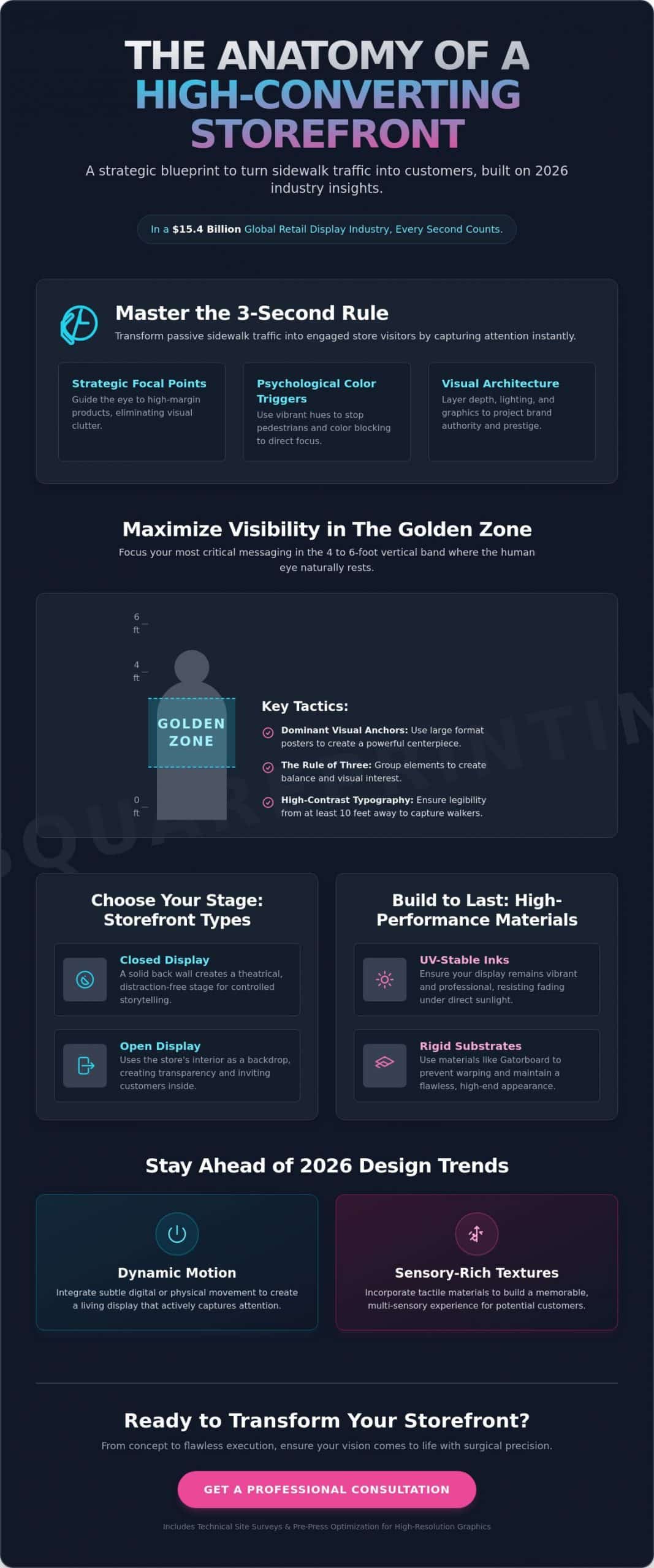
The most effective retail window display ideas prioritize the “Golden Zone.” The Golden Zone is the area between 4 and 6 feet from the ground. This is where the human eye naturally rests. Placing your most critical messaging or visual anchors within this vertical band ensures maximum visibility without forcing the viewer to adjust their posture. To dominate this space, consider these tactics:
- Use large format poster printing to create a dominant visual anchor that centers the entire scene.
- Implement “Rule of Three” groupings within the Golden Zone to create a sense of balance and visual interest.
- Ensure high-contrast typography is legible from at least 10 feet away to capture those walking at a brisk pace.
By focusing on these psychological foundations, you transform your glass into a powerful conversion tool that works around the clock to build your brand’s prestige.
Structural Foundations: Choosing the Right Window Display Type
The physical structure of your storefront is the canvas upon which your brand’s narrative unfolds. Selecting the right architectural format is critical, as it determines how light, depth, and products interact to influence consumer behavior. Research into the psychological impact of visual merchandising suggests that the physical framing of a product can significantly alter its perceived value. When considering retail window display ideas, you must first decide whether your space requires a theatrical boundary or a seamless invitation.
Closed window displays offer the most control, featuring a solid back wall that isolates the viewer’s attention. This setup allows for precise lighting and complex storytelling without the distraction of store activity. Conversely, open window displays remove the backdrop entirely, allowing the shop’s interior to serve as the background. This creates a sense of transparency and space, though it requires meticulous interior housekeeping to maintain a high-end aesthetic. For luxury jewelry or tech boutiques, shadowbox displays provide a dedicated, small-scale stage that elevates high-margin items to the level of art.
The Role of Backdrops and Partitioning
In a closed display, the backdrop is your most powerful tool for creating depth. Using custom wall coverings allows you to transform a flat surface into a high-resolution environment, from a lush forest to a sleek, futuristic cityscape. For retailers who need more flexibility, temporary partitioning using foam core boards offers a lightweight, cost-effective solution. These boards are easily swappable, making them ideal for rapid seasonal transitions or monthly campaign updates. This structural agility ensures your storefront never feels stagnant or outdated.
Maximizing Visibility with Corner and Island Layouts
Corner and island displays present a unique opportunity to capture 270 degrees of foot traffic. These layouts require sophisticated retail window display ideas that maintain their visual impact from multiple angles. We recommend utilizing rigid PVC and Styrene signs for these environments. Their high-density construction prevents warping in high-traffic areas, and they support double-sided printing for maximum exposure. To further extend your message, integrating free-standing floor signs near the entrance can guide customers from the window directly to the point of sale.
If you’re unsure which structural layout suits your specific location, a technical site survey for large format printing can provide the clarity needed to ensure a precision fit.
Material Selection for High-Impact Visuals
The selection of materials is where strategic retail window display ideas transform into a physical reality that commands respect. Most DIY attempts fail because they ignore the engineering requirements of a high-visibility storefront. Sun exposure, humidity, and physical rigidity all play a role in how your brand is perceived over time. Using UV-stable inks is a critical first step; without them, even the most vibrant graphics will fade into a washed-out, unprofessional version of your original vision within weeks.
Rigidity is equally vital for maintaining a polished appearance. While standard foam core is a common choice for indoor presentations, it often falls short in a window environment where temperature fluctuations can cause bowing. Gatorboard, with its dense wood-fiber veneer, provides the structural integrity needed for long-term installations. For those seeking a more sophisticated aesthetic, acrylic photo prints and mirror printing offer a layer of luxury that simple paper or vinyl cannot match. These materials interact with light to create a sense of depth and architectural prestige that simple prints cannot achieve.
Rigid Substrates for 3D Effects
Creating a sense of three-dimensional depth is a hallmark of premium visual merchandising. We recommend reviewing our Gatorboard prints guide to understand why this material is the preferred choice for professional-grade backdrops and structural elements. For a floating, high-end aesthetic, acrylic signs offer a glass-like finish that is virtually indestructible. By utilizing precision die-cutting techniques, we can produce custom-shaped elements that break the traditional rectangular frame, adding a dynamic, sculptural quality to your retail window display ideas.
Vinyl and Decal Strategies
Window decals provide a versatile way to layer branding without obstructing the view into your store. Perforated vinyl is a sophisticated solution that allows natural light to enter the premises while presenting a solid, high-resolution graphic to those on the sidewalk. Depending on your campaign cycle, you might choose high-tack adhesives for permanent branding or removable decals for seasonal promotions. UV-printed corosigns offer an affordable yet weather-resistant option for outdoor-facing windows. These elements allow for rapid updates, ensuring your storefront remains current with the latest trends and promotions without requiring a full structural overhaul.
2026 Design Trends and Creative Ideas for Every Sector
In 2026, the most effective retail window display ideas are those that bridge the gap between physical craftsmanship and digital interactivity. Static windows are increasingly being replaced by environments that breathe and move. Motion is no longer an optional luxury; it’s a physiological requirement to capture the wandering eye. Integrating electric retractable banners allows you to introduce scrolling messaging and changing visuals that break the visual monotony of the street. This dynamic movement serves as a high-visibility anchor that draws attention from a distance.
Texture is also making a significant comeback through “Maximalist Textures.” By moving away from flat paper, brands are using fabric posters and textured fine art posters to create a sense of tactile luxury. These materials absorb and reflect light differently than standard vinyl, providing a sensory appeal that suggests a bespoke, high-end product. For brands leaning toward minimalist luxury, the strategic use of negative space paired with mirror printing creates an illusion of infinite depth. This technique reflects the environment back at the customer, literally placing them within the brand’s visual story.
Tech-Forward Retail Displays
The most successful storefronts in 2026 don’t stop working when the doors lock. By combining digital screens with large-format print backdrops, you create a layered experience that feels futuristic yet grounded. We’re seeing a rise in the use of QR codes integrated into high-resolution window decals. This allows for “after-hours” shopping, where a customer can scan a display and purchase an item directly from their phone. This shift from passive viewing to active engagement turns your window into a 24/7 revenue generator.
Seasonal Execution Strategies
Rapid turnover is the key to maintaining relevance in high-traffic areas. When implementing seasonal retail window display ideas, speed is your greatest asset. For holiday planning, large format poster printing provides the speed and scale necessary to transform a storefront overnight. Transitioning from Spring to Summer becomes effortless when you utilize reusable vinyl clings that can be layered over permanent graphics. The goal is to create “Instagrammable” moments within the window frame, encouraging shoppers to share your display on social media. This effectively turns your physical storefront into a digital marketing asset.
Ready to modernize your storefront with motion? Explore our electric retractable banners to start capturing more attention today.
From Concept to Installation: Executing Your Retail Vision
Even the most brilliant retail window display ideas fail if the execution is sloppy. A single bubble in a window decal or a slightly crooked banner can shatter the illusion of prestige you’ve worked so hard to build. Precision begins long before the first print run; it starts with a technical site survey. Measuring the exact dimensions of your window frame, accounting for structural obstructions, and assessing light angles are essential steps to ensure a surgical fit. This proactive approach eliminates the friction of last-minute adjustments during the installation phase.
Once measurements are confirmed, pre-press optimization becomes the priority. Large-scale graphics demand high-resolution files that maintain their integrity at scale. We meticulously review your artwork to ensure every detail remains sharp, preventing the pixelation that often plagues amateur projects. This commitment to detail ensures that your brand’s visual handshake is as polished as it is powerful.
The Professional Printing Process
High-impact visuals require more than standard equipment. Our large format printing capabilities utilize industrial-grade technology capable of handling diverse substrates with extreme color accuracy. Brand consistency is critical, especially when your retail window display ideas span different materials like acrylic, PVC, and fabric. We utilize sophisticated color-matching protocols to ensure your brand’s signature palette remains unified across every element. Finishing options, including UV-protective lamination and custom die-cutting, provide the final professional touch, transforming flat prints into architectural components that resist wear and tear.
Installation and Maintenance
The physical application is where your vision truly comes to life. When applying floor and wall decals, we follow a strict protocol to eliminate air bubbles, wrinkles, and misalignment. Maintenance is equally important for long-term ROI. Regular cleaning with non-abrasive solutions and ensuring your graphics have built-in sun protection will keep the display looking fresh for the duration of your campaign. When the season ends, professional-grade adhesives allow for clean removal, protecting your glass surfaces from residue or damage.
For multi-location retail brands, we simplify the logistical complexity through corporate portal management. This system allows marketing teams to manage rollouts across dozens of locations simultaneously, ensuring that every storefront reflects the same high standard of quality. Whether you’re managing a single boutique or a national chain, our results-oriented process moves you quickly from an initial concept to a high-visibility reality.
Transforming Your Storefront into a High-Conversion Asset
The modern retail landscape doesn’t reward mediocre design. Success in 2026 requires a sophisticated blend of visual psychology, structural depth, and material performance. You’ve seen how the 3-second rule and the Golden Zone can capture attention, while rigid substrates like Gatorboard and acrylic ensure your brand maintains its prestige under any conditions. By moving from passive product listings to active storytelling, you transform your glass into a powerful tool for driving store entries. Executing these retail window display ideas with precision is the final step in establishing your store as a neighborhood landmark.
We’re here to help you navigate every technical detail of this process. Since 2003, we’ve specialized in expert large-format printing that meets the demanding standards of modern business. Our comprehensive approach includes on-site installation and technical assessments to ensure a perfect fit every time. We exclusively use durable, UV-stable materials that resist fading and warping, protecting your investment and your brand’s reputation.
Elevate your storefront with professional retail displays from Image Square Printing.
Your storefront is your most valuable marketing asset. It’s time to build something that stops traffic and starts conversations. We’re ready to bring your high-stakes vision to life with the speed and quality your business deserves.
Frequently Asked Questions
How often should I change my retail window display?
You should refresh your storefront every four to six weeks to maintain maximum impact and engage repeat foot traffic. Frequent updates prevent your brand from becoming part of the background for daily commuters. If your business follows a seasonal model, aim for four major structural overhauls per year, supplemented by smaller monthly refreshes to highlight new product arrivals or limited-time promotions.
What are the best materials for a sun-facing window display?
UV-stable inks and rigid substrates like Gatorboard are the premier choices for windows with high sun exposure. These professional-grade materials prevent the fading, bowing, and warping that typically ruin standard paper or foam core displays. For a more architectural aesthetic, acrylic signs offer exceptional durability and a glass-like finish that withstands intense heat and direct light without losing structural integrity or color clarity.
Can I install large-format window decals myself?
Professional installation is highly recommended for large-scale graphics to ensure a flawless, bubble-free finish that reflects your brand’s quality. While small decals are manageable for DIY projects, large-format retail window display ideas require specialized tools and techniques like wet-application to avoid misalignment or permanent wrinkles. Investing in expert mounting ensures your storefront looks like a high-end brand asset rather than a temporary sticker.
What is the difference between an open and closed window display?
A closed window display features a solid back wall that completely separates the display area from the store interior, creating a controlled, theatrical environment. An open window display has no backdrop, allowing passersby to see directly into your shop. Open layouts promote transparency and natural light, while closed layouts offer superior control over lighting and visual storytelling by eliminating interior distractions.
How much does a professional retail window display cost?
The total investment for a professional display depends on material selection, square footage, and the complexity of the installation. Premium options such as acrylic prints or electric scrolling banners represent a higher initial cost but deliver greater durability and visual impact. We recommend a technical site survey to assess your specific dimensions and structural requirements, ensuring an accurate quote based on your unique vision.
What are the most popular retail window trends for 2026?
Dynamic motion and “elevated minimalism” are the dominant trends for 2026 storefronts. Retailers are increasingly integrating electric retractable banners to capture attention and textured fine art posters to create tactile, high-end interest. Sustainable materials and digital touchpoints, such as QR codes for after-hours engagement, are also becoming standard for brands looking to bridge the gap between physical and digital shopping experiences.
How do I choose the right lighting for my printed display?
Select layered LED lighting that emphasizes your primary focal points without creating harsh glare on vinyl or acrylic surfaces. Cool-toned lights enhance the vibrancy of blues and whites in your retail window display ideas, while warmer tones are better for fabric posters or natural wood elements. Ensure your lighting is programmable to adjust for different times of day, maintaining high-impact visibility after sunset.
Are QR codes effective on storefront window graphics?
QR codes are exceptionally effective for converting window shoppers into digital customers, particularly during after-hours periods. By placing a high-resolution code on a window decal, you allow pedestrians to browse your full inventory or book appointments even when your doors are locked. This provides a measurable way to track the conversion rate and ROI of your physical storefront displays through direct digital analytics.