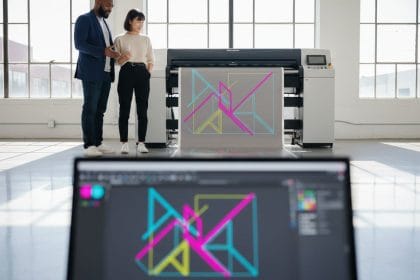

Most “museum quality” labels are nothing more than marketing fluff designed to justify a higher price tag. True excellence in printing isn’t an accident; it’s a measurable technical specification involving acid-free substrates and precise ink chemistry. You’ve likely experienced the frustration of a print that looks vibrant on your monitor but arrives on flimsy paper that curls or yellows within months. When you’re aiming for a high-impact environment, inconsistent results and loss of detail in large-format scaling simply aren’t options. Achieving the prestige of genuine museum quality art poster prints requires a commitment to standards that many commercial shops ignore.
We understand that your reputation relies on the physical quality of your work. That’s why we’ve compiled this guide to help you master the material science and production secrets that transform digital files into gallery-standard masterpieces. You’ll discover how the ISO 9706:2025 standards for permanent paper and 12-color pigment ink systems ensure your prints last 100+ years without fading. We’ll walk through the technical trifecta of resolution, substrates, and color management so you can secure perfect color matching and high-impact visuals for every project.
Key Takeaways
- Learn the specific technical benchmarks, including ISO 9706:2025 standards, that differentiate genuine archival products from standard commercial prints.
- Understand how acid-free substrates and pigment-based inks combine to create museum quality art poster prints that resist yellowing and fading for over a century.
- Discover the role of ICC profiling and pre-press optimization in maintaining color fidelity and preserving fine details across various media types.
- Explore how premium printing elevates corporate environments and adds tangible value to limited edition fine art reproductions.
- Identify the critical questions to ask your production partner regarding their equipment and material transparency to ensure consistent, high-stakes results.
What Defines True Museum Quality Art Poster Prints?
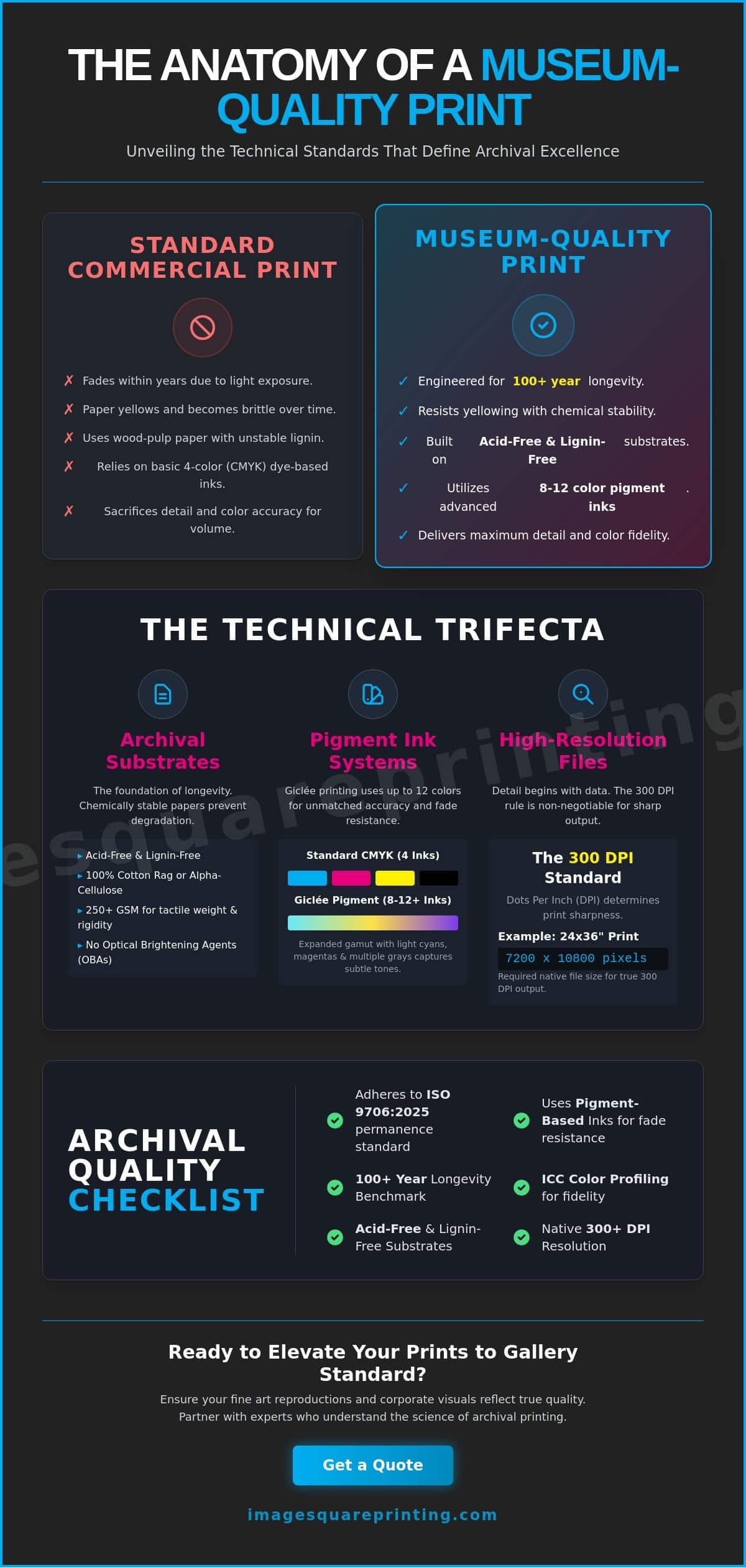
“Museum quality” isn’t a vague aesthetic preference. It’s a rigorous technical classification. True Museum quality art poster prints represent the pinnacle of print science, blending archival-grade materials with high-fidelity reproduction techniques. While a standard digital poster might look acceptable from a distance, it lacks the chemical stability to survive environmental stressors. Authentic museum-standard prints are engineered to meet a 100-year longevity benchmark, ensuring that colors remain as vibrant in a century as they are on the day of production.
Commercial lithography relies on high-speed offset presses and dye-based inks that often sacrifice detail for volume. These mass-market prints are susceptible to fading within a few years of light exposure. In contrast, museum production focuses on individual precision. By using acid-free substrates and pigment-based chemistry, these prints avoid the rapid deterioration and structural breakdown common in cheaper alternatives. This level of craftsmanship is essential for prestige environments where visual integrity is a direct reflection of brand value.
The Giclée Standard: Beyond Standard Inkjet
To understand the mechanics of this process, many professionals ask: What is a Giclée Print? This industry gold standard moves beyond the basic 4-color CMYK process used by office equipment. Instead, it utilizes 8 to 12-color pigment ink systems that include light magentas, light cyans, and multiple shades of gray. This expanded gamut allows for a level of tonal nuance and color accuracy that standard printers can’t replicate. Micro-piezo print heads play a crucial role here, firing microscopic droplets that create incredibly smooth gradients and razor-sharp details. This technology ensures that even the most subtle textures in a fine art reproduction are captured with absolute clarity.
High-Resolution Precision: The 300 DPI Rule
Quality starts at the file level. The 300 DPI (dots per inch) rule is non-negotiable for gallery-standard work. While software can “interpolate” or upscale lower-resolution images, this often results in a loss of sharpness and the introduction of digital noise. Native high-resolution files provide the data density needed for large-scale output. For 2026 standards, a physical print dimension of 24×36 inches requires a native file size of at least 7200×10800 pixels to maintain a true 300 DPI output without digital artifacts. When you combine this digital precision with specialized media like a textured fine art poster, the result is a physical object that carries the weight and prestige of the original artwork.
The Material Science of Archival Poster Printing
The longevity of a print is determined long before the first drop of ink hits the surface. It starts with the molecular stability of the substrate. Standard retail posters use wood-pulp paper containing lignin, an organic polymer that eventually oxidizes and turns yellow when exposed to light. To produce authentic museum quality art poster prints, we utilize materials that are both acid-free and lignin-free. This chemical neutrality prevents the internal “slow fire” that causes cheap paper to become brittle and discolored over time.
Another critical factor in material science is the presence of Optical Brightening Agents (OBAs). While these chemicals make paper appear bright white by reflecting UV light, they are inherently unstable. As OBAs break down, the paper loses its artificial brilliance, leading to a noticeable and permanent color shift in the artwork. Professional archival stocks prioritize natural whiteness or warm tones that remain consistent for generations. When selecting a paper, the weight or “GSM” (grams per square meter) also serves as a benchmark for quality. A higher GSM, usually 250 or above, provides the tactile luxury and structural rigidity needed to prevent curling and damage in high-prestige environments.
Acid-Free and Lignin-Free Paper Stocks
The choice between alpha-cellulose and 100% cotton rag fibers is a defining moment in production. Alpha-cellulose is high-grade wood pulp with the lignin chemically removed, while cotton rag remains the gold standard of the industry, offering maximum durability and a distinct, premium feel. Many of our archival stocks are also “buffered” with calcium carbonate. This acts as a protective shield, neutralizing acidic pollutants from the atmosphere that might otherwise degrade the paper over time. For those seeking a sophisticated, gallery-ready finish, a textured fine art poster offers the perfect balance of chemical stability and visual depth.
Pigment-Based vs. Dye-Based Inks
The science of color is just as vital as the paper chemistry. Dye-based inks are water-soluble and act like a stain, making them highly susceptible to UV fading and moisture damage. In contrast, pigment inks are composed of microscopic solid particles, essentially suspended minerals that bond to the paper’s surface. These pigments are engineered to resist UV degradation, ensuring that your museum quality art poster prints maintain their original hue for 100 years or more. By utilizing specialized ink sets like “Vivid Magenta” and “Photo Black,” we achieve an expanded color gamut that captures the exact intent of the artist. If you’re ready to elevate your next project with these technical standards, explore our options for large format poster printing to see the difference archival materials make.
The Technical Workflow for Gallery-Standard Production
Material science provides the foundation, but the technical workflow determines the final visual impact. Many automated online platforms rely on generic algorithms that treat every file with a “one size fits all” approach. This often results in crushed shadows or blown-out highlights that strip the soul from an image. Producing authentic museum quality art poster prints requires a bespoke strategy where master craftsmen manually oversee every stage of the digital-to-analog transition. We don’t just hit print; we analyze the histogram of every file to ensure black points are preserved and tonal transitions remain fluid.
Professional proofing is the heartbeat of this cycle. Before a full production run begins, a physical proof allows for the verification of color accuracy under gallery lighting conditions. This human intervention identifies subtle shifts that a computer screen might miss. It’s the difference between a mass-produced poster and a prestige art piece that commands attention. By prioritizing this meticulous pre-press optimization, we eliminate the risk of inconsistent results between print runs, providing a reliable solution for high-stakes corporate and gallery projects.
Color Management and ICC Profiling
Consistency across different substrates is impossible without rigorous ICC profiling. Every paper type, from smooth alpha-cellulose to heavy cotton rag, absorbs ink differently. We calibrate our machines to specific paper batches, creating custom profiles that ensure a “What You See Is What You Get” (WYSIWYG) experience for artists and designers. This technical precision is vital when executing large format poster printing where even a minor color shift is magnified across a wide surface area. Our workflow ensures that the “Vivid Magenta” on your calibrated monitor is the exact hue that appears on the final substrate.
Large-Format Capabilities for Gallery Displays
Maintaining museum standards at 40×60 inches and beyond presents unique challenges. Scaling artwork to these dimensions without losing the “hand-painted” texture or “sharp-focus” detail requires advanced interpolation techniques and high-performance hardware. Whether you’re producing life-sized portraits or ultra-wide panoramas, the goal is to maintain a crisp, high-resolution output that stands up to close inspection. For professionals seeking this level of precision, our expertise in large format printing in Santa Monica, Los Angeles, Culver City provides a local, tech-forward partner capable of executing complex, high-visibility projects with quiet confidence and speed.
Strategic Applications for Museum Quality Prints
While many retailers position museum quality art poster prints as high-end home decor, their true value lies in professional, high-stakes environments. In these spaces, a print is more than just an image; it’s a strategic asset that communicates prestige, reliability, and attention to detail. Whether you’re a gallery owner preparing for a major exhibition or a corporate art buyer curateing a headquarters, the technical standards we’ve established ensure your visuals stand up to professional scrutiny. These prints serve as the primary medium for those who cannot afford the visual degradation common with standard commercial output.
Hospitality and exhibition spaces present unique challenges that only archival-grade production can solve. Luxury hotels and lounges often feature intense, 24/7 lighting that would cause standard dyes to shift or fade within months. Similarly, curators and collectors demand a level of fidelity that honors the original artist’s intent. Meeting these standards requires a mastery of the materials and workflows previously discussed, ensuring that every piece remains a permanent fixture of the environment’s aesthetic. High-traffic areas benefit from the structural integrity of high-GSM papers, which resist the physical wear and tear of public displays.
Fine Art Reproductions and Limited Editions
For artists and photographers, the transition from digital file to physical product is a critical step in value creation. Numbered limited editions and certificates of authenticity (COA) only hold weight if the prints themselves are of undisputed quality. While paper is the traditional choice, using canvas as a high-end substrate offers a tactile, three-dimensional presence that mimics original paintings. Maintaining absolute visual consistency between the first and last print in a limited edition series is critical to preserving the market value and artistic integrity of the entire run. This reliability allows creators to scale their business without compromising the “master craftsman” feel of their brand.
Corporate Branding and Prestige Environments
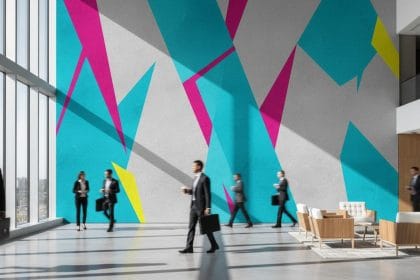
Modern businesses are increasingly transforming their physical offices into brand-aligned galleries to inspire employees and impress clients. This goes beyond simple signage; it’s about creating an immersive experience. By integrating museum quality art poster prints with digital custom wall coverings, companies can curate spaces that reflect their corporate heritage and future vision. For those looking to make a massive visual impact, our Ultimate Guide to Wall Murals provides deeper insights into transforming entire architectural surfaces into high-impact visual statements.
If you’re ready to elevate your brand with gallery-standard production, explore our professional large format poster printing options to start your project today.
Choosing the Right Partner for Your Art Production
Selecting a production partner is the final hurdle in securing authentic museum quality art poster prints. High-volume marketplaces often sacrifice human oversight for automated speed, leaving you with the color shifts and crushed details discussed earlier. In 2026, tech-forward craftsmanship means combining advanced machinery with the discerning eye of a master printer. A reliable partner offers full material transparency, listing specific paper weights and ink chemistry rather than hiding behind vague marketing terms. This collaborative approach ensures your high-stakes projects receive the technical attention they deserve.
Image Square Printing bridges the gap between artisanal quality and commercial efficiency. We understand that prestige projects often operate on tight timelines. Our local presence allows us to deliver expedited results without compromising the archival standards established in this guide. By treating every order as a business solution rather than a mere product, we solve the challenge of maintaining visual impact in high-pressure environments. We don’t just print your files; we act as a proactive partner in the production process, ensuring every detail aligns with your vision.
Custom Finishing and Mounting Options
The journey doesn’t end when the ink dries. Protecting your investment requires sophisticated finishing techniques that enhance both durability and aesthetic appeal. For high-traffic corporate environments, protecting prints with UV laminates or mounting them on gatorboard prints provides structural rigidity and long-term protection against warping. If you’re seeking a modern gallery look with incredible depth and luminosity, acrylic photo prints offer a high-impact alternative to traditional framing. Each finish has its own set of pros and cons regarding glare and weight, making expert consultation vital for the right selection.
Scaling Your Art Production
Moving from a single limited edition piece to high-volume commercial needs shouldn’t result in quality loss. Professional production partners utilize dedicated portals for inventory management and multi-location distribution, ensuring consistency across different geographic hubs. This infrastructure allows you to scale your art program while maintaining the “master craftsman” standard for every single unit. Whether you’re distributing prints to a dozen luxury lounges or a single flagship gallery, the workflow remains precise and efficient. If you’re ready to secure gallery-standard results for your next project, contact Image Square Printing for a custom art print consultation and experience the difference of professional craftsmanship.
Secure the Future of Your Visual Legacy
Investing in high-fidelity output is a commitment to the long-term value of your creative vision. You’ve seen how the marriage of 12-color pigment ink systems and acid-free substrates creates the 100-year longevity benchmark that curators demand. True Museum quality art poster prints aren’t just about the initial visual impact; they’re about maintaining that integrity against time and environmental stressors. By mastering the technical workflow from high-resolution file preparation to custom ICC profiling, you ensure that every print remains a faithful reproduction of the original intent.
Image Square Printing brings over 20 years of large-format expertise to your most demanding projects. We prioritize material transparency and technical precision, using specialized archival substrates that stand up to professional scrutiny. Our master craftsmen are ready to help you navigate the complexities of gallery-standard production with quiet confidence and speed. We don’t just process orders; we collaborate with you to solve business challenges through visual excellence.
Elevate your artwork with Image Square Printing—Order your Museum Quality Prints today. We’re excited to help you bring your most ambitious projects to life with a level of quality that commands respect.
Frequently Asked Questions
What is the difference between a standard poster and a museum quality art print?
Standard posters rely on wood-pulp paper and dye-based inks that degrade and fade within a few years. In contrast, museum-standard production uses acid-free cotton or alpha-cellulose substrates combined with pigment-based chemistry. This shift from temporary decoration to a permanent asset ensures the physical structure doesn’t become brittle or yellow over time.
How long do museum quality art poster prints last before fading?
These prints are engineered to last 100 years or more under standard indoor display conditions. By utilizing pigment inks and chemically stable media, the visual integrity remains intact far longer than commercial alternatives. Proper environmental control, such as avoiding direct moisture and extreme heat, helps maintain this century-long lifespan.
Can I turn a low-resolution photo into a museum quality poster?
You can’t create digital data that doesn’t exist in the original file. While interpolation software can upscale images, it often introduces blurriness or digital noise that fails gallery inspection. For true professional results, we recommend starting with a native 300 DPI file at the final print dimensions to preserve every detail.
What is the best paper weight for fine art poster prints?
A weight of 250 GSM or higher is the industry benchmark for prestige projects. Heavier paper provides the structural rigidity needed to prevent curling and offers a tactile sense of luxury. It also handles the heavy ink loads of 12-color systems without warping or saturation issues.
Do museum quality prints require special framing or glass?
Archival prints perform best when protected by UV-filtering glass and acid-free matting materials. While pigment inks are highly resistant to light damage, shielding them from environmental pollutants and UV radiation preserves the substrate’s integrity. Using museum-grade glass also reduces glare, which is vital for high-visibility corporate or gallery installations.
Is giclée printing the same as museum quality printing?
Giclée is the technical process used to achieve museum quality art poster prints. It involves high-resolution inkjet production using a minimum of 8 to 12 archival pigment inks. While the terms are often used interchangeably, “museum quality” specifically confirms that both the ink chemistry and the paper substrate meet rigorous archival longevity standards.
What file format should I provide for the best art print results?
Flattened TIFF or high-resolution PDF files are the preferred formats for professional art production. These formats preserve maximum detail without the compression artifacts found in standard JPEGs. We recommend using the Adobe RGB (1998) color space to take full advantage of the wide gamut offered by our specialized ink systems.
Can I get museum quality prints in large-format sizes?
Yes, museum standards are fully maintainable even at scales of 40×60 inches and beyond. Large-format production requires specialized hardware capable of high-density ink placement on wide-roll archival media. This allows for immersive gallery displays and corporate installations that retain crisp focus across massive surface areas.