
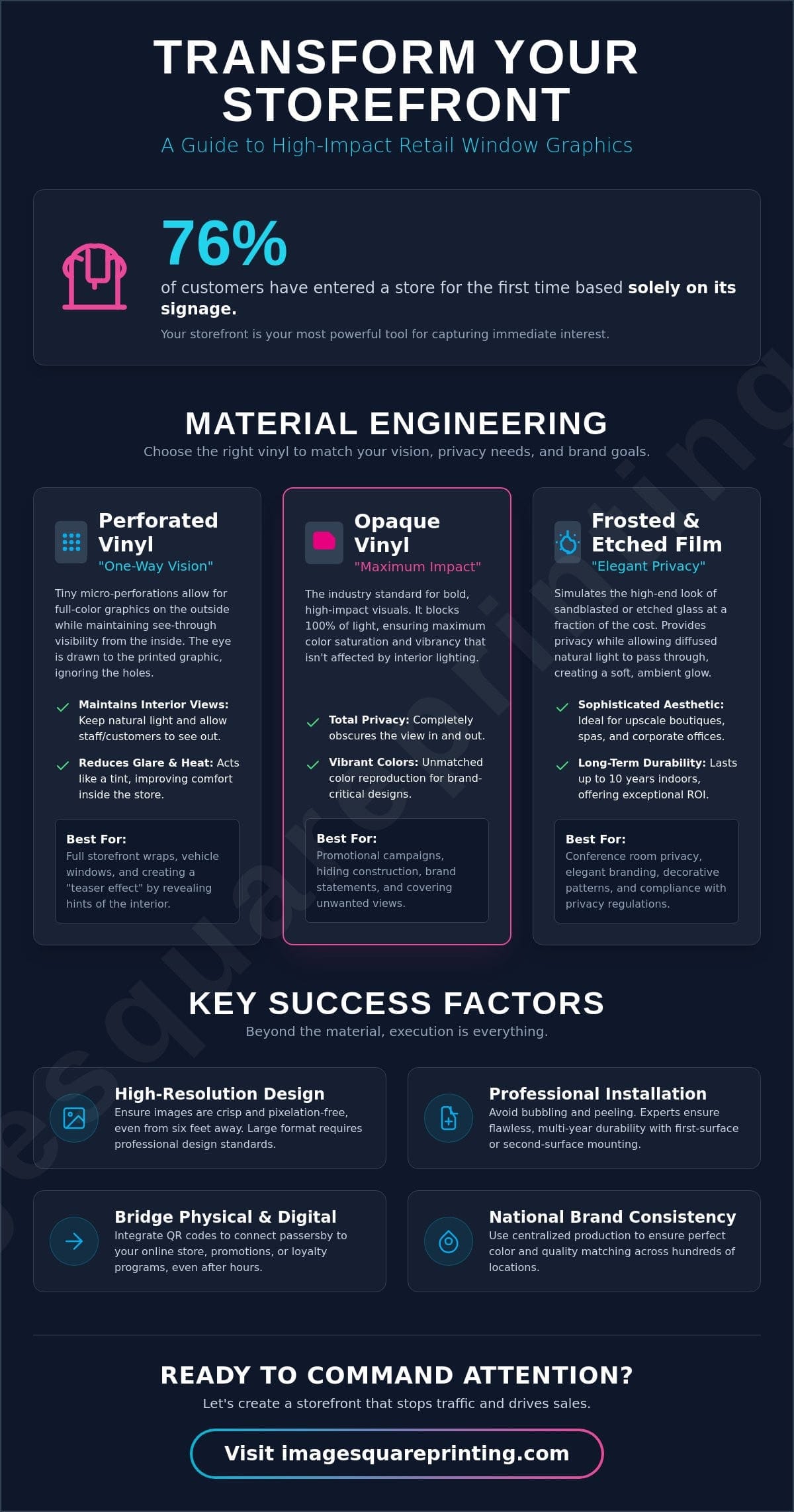
A study by the Sign Research Foundation found that 76% of customers have entered a store they had never visited before based solely on its signage. This data confirms that retail window graphics printing is the most powerful tool for capturing immediate interest in a crowded market. However, a storefront’s impact is often diluted by technical failures like bubbling vinyl or low-resolution imagery that looks pixelated to anyone standing within six feet. You’ve likely seen high-stakes branding projects suffer because the material choice didn’t account for sunlight exposure or local regulations. It’s a common pain point that turns a potential asset into a liability.
We believe your storefront should reflect the same precision and quality as the products you sell. This guide will help you master the technical and strategic nuances required to transform your glass into a high-conversion branding asset. We’ll detail the differences between perforated one-way vision and full blockout films, while addressing the latest 2026 standards for durability and compliance. You’ll gain a clear roadmap for selecting premium materials that maintain their vibrant color and structural integrity for years. Let’s move beyond basic decals and build a visual presence that commands authority in any retail corridor.
Key Takeaways
- Learn how to optimize storefront ROI by using strategic visuals that increase “stop-and-dwell” time in high-traffic retail corridors.
- Identify the best material for your specific project by comparing the technical benefits of perforated, opaque, and frosted vinyl for retail window graphics printing.
- Master design standards for large-format displays, including resolution requirements and techniques for managing visual gaps created by window mullions.
- Understand the strategic advantages of professional installation and the durability differences between first-surface and second-surface mounting.
- Discover how to scale your branding across hundreds of locations using centralized production to ensure total color and quality consistency.
Maximizing Storefront ROI with Strategic Retail Window Graphics
Modern storefronts are no longer static barriers; they’ve evolved into high-performance branding skins. In the 2026 retail market, retail window graphics printing serves as a multi-functional tool that bridges the gap between digital discovery and physical foot traffic. High-traffic retail corridors demand more than a simple logo on the door. To capture “stop-and-dwell” time, your glass must communicate a clear value proposition within seconds. Unlike permanent architectural changes that require permits and massive capital, window graphics allow for a “soft renovation” that updates your brand identity without structural construction.
Achieving a high return on investment requires balancing bold promotional messaging with the functional needs of your space. While full-coverage wraps offer maximum impact, they can also block natural interior lighting, potentially affecting the customer experience inside. Strategic placement uses the transparency of the glass to your advantage, creating a dialogue between the street and the store interior. This approach transforms your windows into a dynamic asset that drives conversion while maintaining a welcoming, well-lit environment for shoppers.
The Psychology of Storefront Visibility
Successful Visual merchandising relies on “Visual Weight” to guide a customer’s eye. By placing high-contrast elements at eye level, you direct attention toward specific entry points or featured products. Street-level glare and reflections often wash out weak designs; we overcome this by using saturated color palettes and matte finishes that absorb light rather than reflecting it. You can create a “Teaser Effect” by using partial coverage, which provides enough privacy to intrigue passersby while leaving enough visibility to showcase the energy of the store interior.
Integrating Window Graphics into a Multi-Channel Brand Strategy
Your storefront is a physical extension of your digital presence. For national brands, maintaining color consistency across different mediums is non-negotiable. We ensure that the vibrant hues in your window vinyl perfectly match your outdoor vinyl banners and digital assets. This cohesion builds immediate brand recognition and trust.
Modern retail window graphics printing also incorporates digital triggers like QR codes to bridge the gap to mobile engagement. These codes allow customers to browse collections or join loyalty programs even after business hours. By planning for seasonal rotation, you can keep your storefront fresh and relevant. High-frequency updates are easy to manage when you treat your windows as a rotating billboard, allowing your brand to respond to market trends and local events with surgical precision.
Material Engineering: Choosing Between Perforated, Opaque, and Frosted Vinyl
Selecting the right substrate is a technical decision that dictates both the lifespan and visual clarity of your storefront. In retail window graphics printing, the material isn’t just a canvas; it’s a performance layer that manages light, privacy, and heat. Opaque vinyl remains the industry standard for high-impact, full-color blockout displays. It offers maximum color saturation and complete privacy by blocking 100% of light transmission. This makes it the preferred choice for covering construction zones or creating bold brand statements that won’t be washed out by interior store lights.
Conversely, clear and transparent vinyl allows for “floating” graphics. This technique maintains store interior visibility while adding sophisticated branding elements to the glass. For those seeking an architectural aesthetic, frosted and etched glass films provide a high-end look that mimics expensive sandblasting at a fraction of the cost. These films are particularly effective for corporate offices or luxury boutiques where subtle, sophisticated branding is required. According to current 2026 durability standards, frosted films can last up to 10 years in indoor applications, providing an exceptional long-term return on your branding investment.
The Science of One-Way Vision (Perforated Vinyl)
Perforated vinyl, often called one-way vision film, uses a pattern of micro-punctures to allow visibility from one side while displaying a solid image on the other. The hole-to-vinyl ratio is the critical metric here. A 50/50 pattern is standard for retail, offering an even balance of image quality and outward visibility. However, if your design requires higher resolution, a 70/30 pattern provides more surface area for ink but reduces the light entering the store by about 50%. Remember that the “one-way” effect relies on lighting physics; the exterior light must be significantly brighter than the interior light for the graphic to appear opaque to passersby.
Specialty Finishes: Frosted, Mirror, and Textured Options
Luxury retail environments often require materials that go beyond standard matte or gloss finishes. Utilizing mirror printing adds a unique dimension of depth and reflectivity that captures shifting light as customers walk by. This creates a 3D visual effect that standard vinyl cannot replicate. You can also achieve functional privacy in fitting rooms or consultation areas by layering frosted films with cut-out opaque logos. This multi-layered approach turns flat glass into a textured, high-prestige branding asset. If you’re ready to upgrade your glass, you can explore our full range of custom window solutions to find the perfect fit for your brand’s specific needs.
Design Standards for Large-Format Storefront Displays
Designing for glass requires a shift in perspective from traditional print media. In retail window graphics printing, your artwork must perform across two distinct viewing distances: the high-speed street view and the intimate sidewalk experience. Achieving this duality starts with resolution. While 300 DPI is the standard for brochures, large-format files often require 100 to 150 DPI at 100% scale to maintain crispness without creating unmanageable file sizes. We always recommend vector-based artwork for logos and typography; it’s the only way to ensure every curve remains razor-sharp when scaled to cover ten feet of glass.
One of the most frequent design oversights is the “Mullion Gap.” Most storefronts aren’t single sheets of glass but are divided by metal frames or dividers. If your design spans multiple panes, you must account for these physical breaks. A common mistake is placing critical text or a brand’s “eye” directly where a frame will sit, effectively cutting the message in half. Strategic designers build these gaps into their layouts, ensuring the visual flow continues naturally across the entire storefront without losing legibility to the architecture. This technical foresight turns a structural obstacle into a professional, cohesive display.
File Setup and Technical Specifications
Precision in pre-press prevents costly re-prints. When graphics span multiple windows, we require a safety margin and bleed of at least two inches to allow for installation adjustments. If you’re using clear vinyl, managing white ink layers is essential. Without a white “under-strike,” your colors will appear translucent and washed out against the store’s interior lights. We utilize UV-curable inks as our 2026 standard for south-facing windows, as these inks provide superior resistance to color fading from intense solar exposure. This ensures your investment looks as vibrant in month twelve as it did on day one.
Color Management for National Brand Consistency
Maintaining a unified brand identity across different regions requires rigorous color management. We use Pantone matching to ensure that your corporate colors remain consistent, whether they’re printed on opaque vinyl or perforated film. The choice of lamination also dictates how customers perceive those colors. A gloss finish provides high-impact saturation but can create blinding glare under bright streetlights. Conversely, a matte finish offers a sophisticated, non-reflective look that’s easier to read in direct sunlight. If your team needs assistance with file optimization, our graphic design services can help translate your vision into a production-ready format that guarantees results.
Professional Installation and Maintenance: Ensuring Multi-Year Durability
High-performance visuals are only as effective as their application. While some entry-level guides suggest DIY methods, professional installation is non-negotiable for any retail window graphics printing project exceeding 24 inches. Large-scale panels require specialized squeegee techniques to prevent “silvering,” which is the trapped air that creates a cloudy appearance behind the vinyl. Professional installers manage the physical tension of the material, ensuring that the graphic lays flat without stretching or distorting the brand’s key imagery. If you’re managing a high-stakes storefront, the risk of material waste from a failed DIY attempt far outweighs the cost of expert execution.
The technical decision between first-surface and second-surface mounting also dictates the project’s longevity. First-surface graphics are applied to the exterior of the glass. This is the preferred method for maximum vibrancy and glare reduction, as there is no glass barrier between the viewer and the ink. Second-surface mounting involves applying the graphic to the interior, facing outward. While this requires “mirrored” printing, it offers an extra layer of protection against street-level vandalism and extreme weather. Our team evaluates your specific environment to determine which mounting strategy will best preserve your brand’s prestige.
The Installation Process: From Site Survey to Final Squeegee
Precision begins long before the vinyl touches the glass. A technical site survey is essential to measure glass thickness and frame depth, as these factors influence how the material responds to thermal expansion. Surface preparation is equally critical; we remove microscopic debris and chemical residues that can cause premature edge lifting. When a design spans multiple architectural panels, we use laser-alignment tools to ensure that the “Mullion Gap” discussed in previous sections is perfectly managed, creating a seamless visual flow across the entire storefront.
Removal and Life-Cycle Management
Every branding campaign has a life cycle, and planning for the end is as important as the beginning. We select adhesives based on your campaign duration: permanent for multi-year branding or ultra-removable for seasonal promotions. Professional removal techniques involve controlled heat application to ensure zero residue or glass damage. You should monitor your graphics for signs of UV degradation or edge curling, which typically occur after 3 to 5 years for outdoor vinyl. When it’s time for a refresh, you can rely on our large format printing expertise to handle both the removal and the next high-impact installation.
Maintaining your investment requires a specific protocol. You must avoid ammonia-based cleaners, as they can degrade the laminate and the adhesive bonds at the edges. A simple solution of mild soap and water, applied with a soft microfiber cloth, will keep the surface clean without scratching the protective UV layer. This disciplined approach to maintenance ensures that your storefront remains a high-conversion asset for its entire intended lifespan.
Custom Window Solutions for National Retail Consistency
Scaling a brand identity across hundreds of geographical locations presents a unique set of logistical challenges. For national retailers, retail window graphics printing must remain consistent regardless of whether the store is in a metropolitan hub or a suburban center. Centralizing your production ensures that color profiles, material durability, and brand narratives don’t drift over time. When you rely on fragmented local vendors, you risk variations in ink saturation and substrate quality that can dilute your brand’s prestige. A unified production strategy guarantees that your flagship’s vibrant visuals are replicated with surgical precision across your entire fleet.
While the brand narrative remains central, we recognize that every architectural footprint is different. Regional store layouts often feature unique window dimensions and framing systems that require tailored adjustments to the master design files. We specialize in adapting core brand assets to fit these specific local requirements without sacrificing the integrity of the original vision. This collaborative approach allows for a “national feel, local fit” that respects the nuances of each physical space while maintaining total brand control from a corporate level.
Corporate Portal Management and Fulfillment
Efficiency in high-frequency retail rollouts depends on streamlined ordering. Our dedicated online systems allow regional managers to order approved graphics with a few clicks, ensuring that seasonal promotions launch simultaneously nationwide. This centralized inventory management reduces lead times and eliminates the friction of local file handling. To create a truly immersive brand experience, many of our clients integrate their window programs with custom wall coverings. This holistic approach transforms the entire retail environment, moving beyond the glass to create a cohesive interior narrative that supports the storefront message.
Why Image Square Printing is the Partner for 2026 Retailers
We bring over 20 years of large-format expertise to every project, providing the technical reliability that high-stakes retail demands. Our high-resolution output is engineered to meet the sophisticated standards of modern luxury branding, where every detail is scrutinized by a discerning audience. We aren’t just a vendor; we’re a proactive partner in your production process. From complex site surveys to professional on-site mounting, we manage the technical friction so your team can focus on strategy. Elevate your storefront with custom retail window graphics today.
Transforming Your Glass into a High-Performance Branding Skin
Mastering the technical landscape of retail window graphics printing is what separates a standard storefront from a high-conversion branding asset. We’ve explored how selecting the right substrate, from perforated films to frosted architectural layers, dictates both the light management and the longevity of your display. Success in the 2026 retail market requires a disciplined approach to design standards and a commitment to professional installation to avoid the common pitfalls of bubbling and UV degradation. By centralizing your production, you ensure that your brand’s visual identity remains razor-sharp across every location.
Since 2003, Image Square Printing has brought over 20 years of technical expertise to high-stakes branding projects. We utilize high-resolution UV-curable inks to provide the maximum fade resistance your south-facing glass requires. Our team manages the entire lifecycle, offering professional on-site installation and mounting to ensure your vision is executed with surgical precision. Don’t leave your storefront’s impact to chance. Request a Custom Quote for Your Retail Window Graphics Project and let’s build a visual presence that commands authority. Your windows are your most valuable billboard; it’s time to make them work for you.
Frequently Asked Questions
What is the difference between first-surface and second-surface window graphics?
First-surface graphics are applied to the exterior side of the glass, offering the most vibrant color saturation and significantly reducing street-level glare. Second-surface graphics are applied to the interior side facing out, which provides a protective glass barrier against vandalism and extreme weather. While first-surface is the industry standard for maximum retail window graphics printing impact, second-surface application is a strategic choice for high-traffic urban environments where durability is the primary concern.
How long do retail window graphics typically last before they need to be replaced?
Outdoor vinyl graphics generally maintain their structural integrity for 3 to 5 years when protected with a high-quality UV laminate. Indoor applications, such as frosted or etched films, often last between 7 and 10 years because they aren’t subjected to direct solar heat and environmental pollutants. Regular maintenance and choosing the correct substrate for your specific climate will ensure your branding remains a high-prestige asset throughout its intended lifecycle.
Can I see through perforated window decals from the inside of my store?
Yes, perforated vinyl is engineered to allow outward visibility while presenting a solid, high-resolution image to passersby on the street. This “one-way” effect relies on lighting physics; it functions perfectly when the exterior light is brighter than the interior environment. You should account for a reduction in natural light transmission of approximately 50%, which can actually help manage interior temperatures in south-facing storefronts.
Will window graphics damage my storefront glass or leave a sticky residue?
Professional-grade vinyl films are designed to be removed without damaging the glass surface or leaving permanent marks. Removable adhesives pull away cleanly within their rated lifespan, while permanent adhesives may require controlled heat and specialized cleaners for a residue-free finish. Using the correct removal protocols ensures that your glass remains in pristine condition, ready for the next seasonal campaign or branding update.
What is the best way to clean windows that have vinyl graphics applied to them?
Clean your graphics using a mild soap and water solution applied with a soft microfiber cloth. It’s critical to avoid ammonia-based cleaners and high-pressure washers, as these can degrade the adhesive bonds and cloud the protective laminate. Gentle, regular cleaning prevents the buildup of grit that can cause microscopic scratches, keeping your retail window graphics printing looking sharp and professional for years.
How do I measure my storefront windows for a full-coverage wrap?
Measure the width and height of each individual glass pane separately rather than treating the entire storefront as a single unit. You must also record the exact width of the mullions and frames to ensure your design accounts for these physical breaks in the visual narrative. We recommend adding a two-inch safety bleed to all edges of your artwork to allow for precise on-site trimming and alignment during installation.
Do I need a permit for large-scale retail window graphics?
Permit requirements depend entirely on your local municipal codes and specific landlord agreements. For instance, certain regulations like the California Lee Law restrict alcohol retailers from covering more than 33% of their total window area with signage. We advise all clients to verify regional zoning laws or consult with their property management before finalizing large-format designs to ensure the project meets all compliance standards.
What is the turnaround time for custom window graphic printing and installation?
Standard production for custom graphics typically requires 3 to 5 business days following the final approval of your artwork. Installation scheduling is usually coordinated within the same week, depending on site surveys and local weather conditions for exterior applications. We focus on a brisk, efficient workflow to ensure your storefront transformation aligns with your marketing launch dates and seasonal rollout schedules.