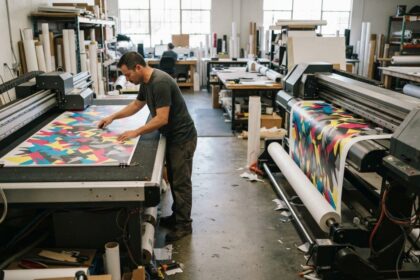

The cleaner-sounding option isn’t automatically the best fit for every print. With eco-solvent vs latex printing, the right choice depends on the material, where the graphic will be displayed, and the balance you need between emissions, energy use, and durability. Eco-solvent printing is commonly suited to flexible outdoor media such as vinyl and PVC, while latex printing can handle flexible materials, including fabrics and wallpaper.
Both technologies can produce vivid, durable large-format graphics, but they work differently and involve distinct trade-offs. This comparison explains how their ink systems affect indoor use, operating costs, weather resistance, and the applications each can support.
You’ll also see where UV printing fits among large-format ink technologies, followed by a practical guide to matching a printing method to your project. The goal is to choose based on the finished graphic’s material and environment, not just the printer’s label.
Key Takeaways
- Match the ink system to the substrate: flexible vinyl and PVC favor different considerations than fabric or wallpaper.
- Account for indoor display conditions by weighing ink emissions, odor, and any drying or curing needs.
- Compare operating costs beyond ink, including energy use, maintenance, and printer requirements.
- Choose based on where the graphic will live and the weather exposure it must withstand.
- Use the decision guide to connect your material, display setting, and application with the most suitable printing approach.
What is Eco-Solvent Printing?
Eco-solvent printing uses solvent evaporation and absorption into the material to dry ink. Comparing it with latex means looking beyond ink type to media compatibility, color reproduction, and printer upkeep.
Eco-Solvent Color Gamut
Color gamut is the range of colors a printer can reproduce. Eco-solvent printers can print on vinyl, PVC, canvas, and certain paper types, so the substrate affects the colors a finished graphic can show. For canvas printing, the surface and coating affect how ink appears and absorbs. Eco-solvent ink dries through evaporation and absorption, rather than the water-based polymer system used by latex inks.
There’s no single gamut result for every eco-solvent printer and media combination. A vivid brand color on vinyl may look different on canvas because the surfaces absorb ink differently. For accurate color, match the printer’s color profile to the specific material and intended graphic before production.
Print Quality and Color Density
Print quality depends on more than the ink category. Image detail, color profiles, substrate, and the amount of ink deposited all shape the final result. Eco-solvent ink penetrates the substrate and forms a strong bond, while latex inks use polymer particles suspended in water. The described latex system uses a fixed droplet size of 12 picoliters.
Ink use affects color density: heavier coverage can create deeper-looking areas, while fine detail depends on the image and print settings. A large, saturated graphic and a finely detailed image place different demands on the print file. For either technology, consider viewing distance and material alongside color requirements.
Purchase prices vary by printer format, capacity, and configuration. Latex printers and inks can have a higher upfront cost than traditional solvent-based printers.
Maintenance needs differ by system. Eco-solvent printers require regular cleaning and maintenance, making upkeep part of their operating routine. With latex, heat-sensitive substrates can pose compatibility issues, and the heated platen is part of the drying and curing process.
| Printing option | Ink and drying method | Media fit | Color planning |
|---|---|---|---|
| Eco-solvent | Solvent evaporation and substrate absorption | Vinyl, PVC, canvas, and certain papers | Match the color profile to the specific surface |
| Latex | Water-based ink with suspended polymer particles | Flexible media; heat-sensitive materials may be limited | Consider the substrate and print settings |
| UV | Ink cures under ultraviolet LED light | Depends on the selected material and printer | Plan around the chosen ink and surface |
Choose eco-solvent when its flexible-media compatibility and substrate bond suit the job; choose latex when its water-based system and compatible media fit the application. For either option, a color profile matched to the actual material is central to consistent graphics.
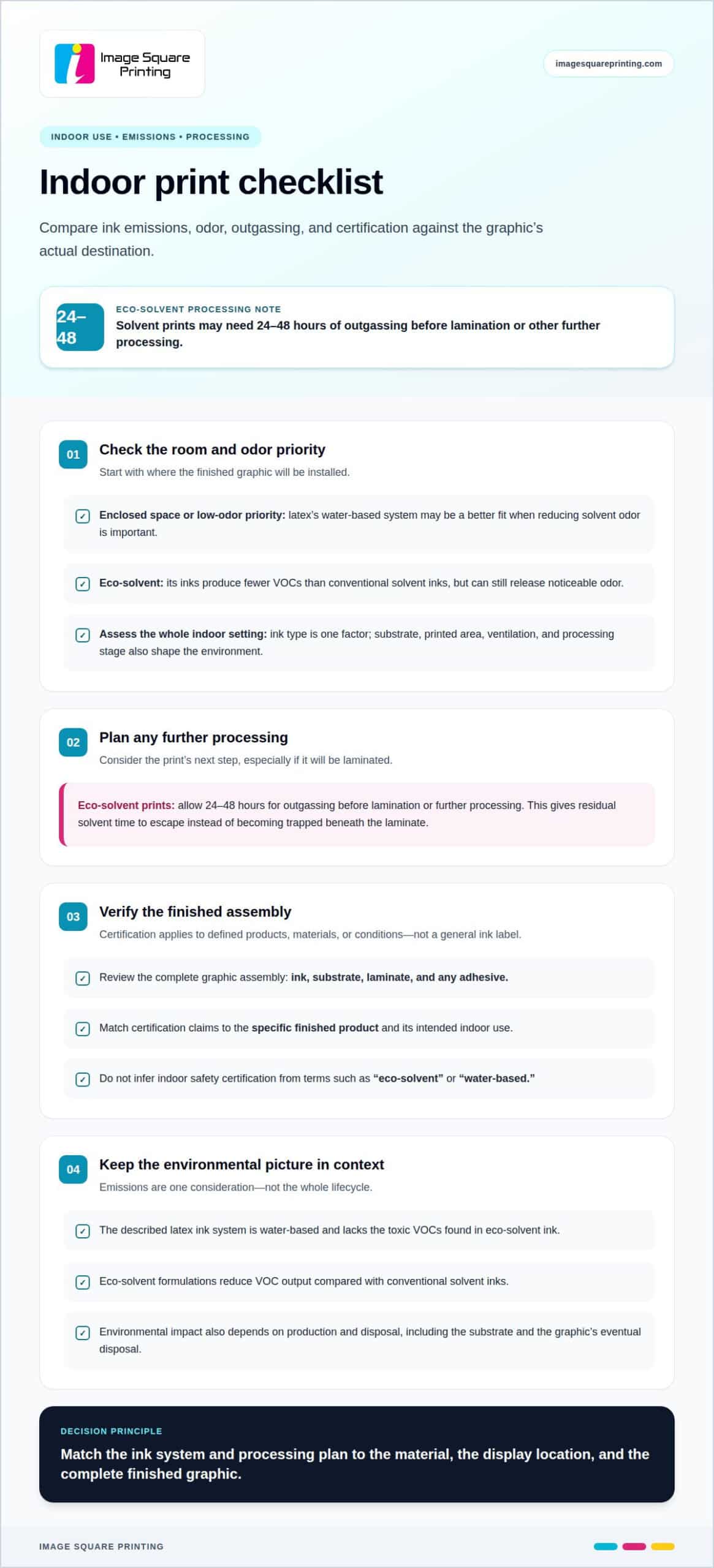
VOC emissions and indoor safety certification
Eco-solvent inks use a lower-toxicity solvent formulation and produce fewer volatile organic compounds (VOCs) than conventional solvent inks. They can still release noticeable odor, though less than traditional solvent inks. Latex inks are water-based, and the described system lacks the toxic VOCs found in eco-solvent ink. These differences matter when graphics will be installed in enclosed spaces, such as a conference room or retail interior.
VOC emissions can affect indoor air quality because compounds released during printing and drying enter the surrounding air. Ink type is one consideration; the substrate, printed area, ventilation, and processing stage also shape the indoor environment. A solvent print may smell during production, even when its emissions are reduced compared with conventional solvent printing. Latex’s water-based ink system can be a better fit when reducing solvent odor is a priority.
Do eco-solvent prints require drying or outgassing before lamination? Solvent inks may require 24-48 hours of outgassing before further processing, including lamination. This interval allows residual solvent to escape from the print rather than becoming trapped beneath the laminate.
Indoor safety certification is separate from ink chemistry. A certification applies to defined materials, products, or conditions; it shouldn’t be inferred from terms such as “eco-solvent” or “water-based.” For a finished sign or wall graphic, consider the complete assembly: ink, substrate, laminate, and any adhesive. A latex-printed graphic and an eco-solvent print may involve different components, so certification claims should match the specific finished product and its intended indoor use.
Environmental impact also depends on production and disposal, not emissions alone. Latex ink’s water-based formulation avoids the toxic VOCs associated with eco-solvent ink, while eco-solvent formulations reduce VOC output compared with conventional solvent inks. Neither description accounts for the substrate or the graphic’s eventual disposal. For a project such as indoor wall graphics, choosing suitable substrates and minimizing unnecessary printed material can help align the production decision with its use.
- For a low-odor priority: latex’s water-based system may suit enclosed settings.
- For eco-solvent lamination: allow 24-48 hours for outgassing before further processing.
- For certification review: assess the complete printed assembly, including ink and substrate.
Use the display location to guide the decision. A graphic intended for a busy indoor room puts air quality and odor in focus, while a print going directly to lamination needs an appropriate outgassing interval. Comparing eco-solvent and latex means weighing both factors against the actual substrates and finished application.
Energy consumption and running costs
Latex printing uses high-temperature thermal curing, so energy consumption includes more than powering the printheads. A heated platen rapidly dries and cures ink after it reaches the media. Eco-solvent printing also uses heat, but its ink dries through evaporation and absorption. The production method, print volume, media, and equipment settings all affect energy use.
Power requirements matter before a printer enters production. Latex machines require a 220v outlet, while one eco-solvent printer setup involved installing two 220-volt outlets. Those examples show why electrical capacity belongs in equipment planning, alongside printer footprint and workflow. A print operation should account for the printer’s installation needs before estimating routine energy use.
Ink is another running-cost factor, but consumption varies with the artwork and print schedule. A full-coverage banner uses a different amount of ink than a graphic with large unprinted areas. Color density, substrate, and print settings also affect ink use. Eco-solvent users should include routine printer cleaning and maintenance in cost calculations, because ink alone doesn’t represent the full expense of keeping production consistent.
Waste can shift the economics. An eco-solvent operator reported emptying a 4-liter ink jug every two to three months; separate reports described wasted ink over the same period. These examples illustrate why tracking actual ink use and discarded output is more useful than estimating from print area alone. Record the jobs produced, usable output, waste, and maintenance supplies over a consistent production cycle.
Latex costs should include the energy demand of its heated platen and thermal curing, as well as ink and media. Eco-solvent calculations should include ink, regular cleaning, and material wasted during production. Neither system has a universal running cost: job coverage, production volume, equipment setup, and maintenance frequency shape the result.
- Plan electrical capacity: account for the latex 220v outlet requirement and printer installation.
- Track total material use: compare ink used with finished prints and production waste.
- Include upkeep: add eco-solvent cleaning and maintenance supplies to operating calculations.
- Compare similar jobs: use the same artwork, media, and production volume when assessing both systems.
For a fair comparison, calculate energy, ink, waste, and maintenance against the same type of work. A high-coverage graphic, for example, may use ink differently from a mostly open design, while latex curing adds a distinct heat-related energy demand. The best fit depends on the costs that matter most in your workflow, not a single headline figure.
Print durability and weather resistance
Durability starts with the conditions a printed graphic must handle. An outdoor sign faces different demands from an indoor wall graphic, even when both use vivid color. Eco-solvent prints are described as weather-resistant and suitable for long-term outdoor applications. Latex prints are water-resistant and suitable for indoor and outdoor use. These descriptions help narrow the choice, but they don’t mean the two print types perform identically in every setting.
Eco-solvent ink penetrates the substrate and forms a strong bond. That bond supports graphics intended for extended outdoor use, such as a banner displayed outside. Latex prints offer water resistance, which suits applications where moisture exposure matters. Water resistance and weather resistance describe different considerations, so match the claim to the actual environment rather than treating the terms as interchangeable.
Think through the graphic’s full life cycle before choosing an ink system. A yard sign may be exposed to rain, while a wall graphic may remain indoors and receive frequent handling. A display moved between locations experiences transport and installation as well as time on view. Each condition affects what durability means for that job. Let the intended substrate and display location guide the decision.
Weather exposure varies from site to site. A covered outdoor display and a sign exposed directly to the elements do not face the same conditions. Define whether the print will encounter moisture, frequent handling, or repeated installation. Then match those demands to the material and the ink system’s stated resistance. This avoids relying on a broad label when the actual use is more specific.
- For long-term outdoor graphics: eco-solvent prints are described as weather-resistant.
- For moisture exposure: latex prints are described as water-resistant and suitable indoors or outdoors.
- For indoor displays: consider handling and movement, not just weather.
- For either option: account for the substrate and the display’s actual environment.
Neither technology removes the need to plan for the finished application. A print’s expected performance depends on where it will be displayed, what it will encounter, and how it will be handled. For example, a graphic intended for prolonged outdoor use calls for attention to weather resistance, while an indoor display may prioritize moisture resistance or repeated handling. Specify the environment first, then select the print approach that suits it.
In practical terms, eco-solvent is a strong fit when the brief calls for weather-resistant printing for long-term outdoor applications. Latex is useful when water resistance and indoor or outdoor use are central criteria. A clear description of the display location, exposure, and handling gives the comparison a meaningful basis and helps prevent choosing solely by ink category.
Large-format printing applications
The application and substrate should lead the format decision. With eco-solvent vs latex printing, the practical distinction often comes down to which media each system supports for the finished graphic.
Eco-solvent printers can print on vinyl, PVC, canvas, and certain paper types. Latex printers can print on paper, vinyl, and fabrics, with banners, wallpapers, and vehicle wraps among their applications.
Eco-Solvent Media Compatibility
Eco-solvent printing is primarily suited to flexible outdoor media, especially vinyl and PVC. Canvas and certain paper types are also compatible, giving this format options beyond outdoor signage. The substrate is central: eco-solvent’s application range includes flexible outdoor materials, while latex also supports fabric and wallpaper. Identify the actual surface before selecting a print method.
Latex Media Compatibility
Latex printing works well on flexible media such as fabrics, wallpapers, and vinyls. Paper is another suitable option, and common formats include banners, wallpaper graphics, and vehicle wraps. Its compatibility with rigid substrates is limited, making latex less suited to applications requiring direct printing onto a rigid board. In eco-solvent vs latex printing, this distinction can quickly narrow the options.
Start with the surface, then consider how the finished piece will be used. A vinyl banner or vehicle wrap points toward flexible-media compatibility, while wallpaper or fabric graphics highlight latex’s application range. PVC and canvas can make eco-solvent relevant. Heat-sensitive substrates also need consideration, since heat used in either process may limit compatibility.
Use the format to narrow the choice, then consider the destination:
- Vinyl or PVC outdoor graphic: eco-solvent is suited to flexible outdoor media.
- Fabric banner or wallpaper: latex supports these flexible applications.
- Paper print: both systems can support paper, depending on the printer and material.
- Rigid board: latex has limited compatibility with rigid substrates.
- Heat-sensitive material: account for heat in the printing process.
For example, a wallpaper installation aligns with latex’s stated media strengths; custom wallpaper printing illustrates that application. A flexible outdoor PVC graphic aligns with eco-solvent’s core media fit. These examples aren’t a blanket ranking. The substrate and intended use should lead the decision.
Name the material first, then define the graphic’s format and destination. For a fabric banner, wallpaper, or vehicle wrap, latex offers a direct media match. For outdoor vinyl, PVC, canvas, or certain paper, eco-solvent is a strong candidate. Plan your large-format print application around the material and finished format.
Image Square Printing
Image Square Printing helps turn your material and display requirements into large-format graphics suited to the intended application. Once you’ve weighed ink type, substrate, and display conditions, the next step is matching the finished format to your project. Options include custom wallpaper printing, retractable banner stands, and Step and Repeat Backdrops for branded environments and events.
Share the graphic’s intended use, material, and display setting to guide the production plan. Contact Image Square Printing to discuss your large-format printing project.
Put Your Print Plan Into Motion
Your next step is to define what the finished graphic needs to do. Consider its setting, material, audience, and role in the broader campaign. A clear brief makes the choice between eco-solvent vs latex printing more practical by connecting the production method to the outcome you want.
Image Square Printing can support your plan with formats such as Retractable Banner Stands, Custom wallpaper printing, and Custom wall covering. Share the intended use and creative direction, then shape the print around the space and message. A focused conversation can turn a technical comparison into a confident production decision.
Contact Image Square Printing to discuss your large-format project. Bring your vision forward with a print plan built around the experience you want to create.
Frequently Asked Questions
What Are the Four Large Format Ink Technologies?
Four commonly discussed large-format ink technologies are solvent, eco-solvent, latex, and UV-curable printing. Solvent and eco-solvent inks rely on solvent-based drying, while latex ink uses a water-based system. UV-curable printing is another technology to consider alongside the other ink systems. For a project, the useful comparison goes beyond the technology name: consider the media, display location, finishing steps, and production requirements together.
What is Latex Printing?
Latex printing uses water-based ink with polymer particles suspended in water. A heated platen dries and cures the deposited ink as the material moves through the printer. This approach is used for applications such as banners, wallpaper, and vehicle wraps. For a project involving flexible fabric or wallpaper, latex media compatibility can be a useful starting point, while the final choice still depends on the exact substrate and intended display conditions.
What is the difference between eco-solvent and latex printing?
The main difference is how the inks work and dry. Eco-solvent ink dries through solvent evaporation and absorption into the substrate; latex ink is water-based and uses suspended polymer particles, with heat involved in curing. Their media strengths also differ: eco-solvent is commonly suited to flexible outdoor media, while latex works well on fabrics and wallpapers. Match the print method to the material and where the graphic will be used.
How do eco-solvent and latex printers compare in print quality and color gamut?
Neither ink category guarantees a wider color gamut by itself. Reproduction depends on the printer, color profile, artwork, and substrate. For example, the same brand color can appear different on matte canvas than on vinyl because the surfaces handle ink differently. Use a profile suited to the chosen media and assess important colors on that material. Viewing distance and image detail also shape how sharp and saturated a large graphic appears.
How durable are eco-solvent and latex prints outdoors?
Both can suit outdoor applications, but their stated resistance differs. Eco-solvent prints are described as weather-resistant for long-term outdoor use, while latex prints are described as water-resistant and suitable indoors or outdoors. A roadside banner and a sheltered display face different exposure conditions, so specify the actual setting and material. Consider moisture, handling, and installation as part of the use case rather than relying on the ink category alone.
Are latex inks safer or lower in VOCs than eco-solvent inks?
Latex inks are water-based and described as lacking the toxic VOCs found in eco-solvent ink. Eco-solvent formulations have lower toxicity and reduced VOC output compared with conventional solvent inks, but can still produce noticeable odor. For an indoor installation, consider where printing and finishing occur, the graphic’s substrate, and the room’s ventilation. Ink descriptions alone don’t establish certification for a complete finished graphic or its components.
How do eco-solvent and latex printing costs compare per square foot?
There isn’t one per-square-foot figure that applies to every job. Total production cost depends on media, ink coverage, print volume, waste, energy use, and maintenance. Latex adds energy demand from thermal curing, while eco-solvent workflows include regular cleaning and maintenance. For a meaningful estimate, compare the same artwork, substrate, finished dimensions, and production quantity. Include finishing and waste in the calculation, not just the printed area.
Which is better for vehicle wraps, banners, signs, and wall graphics?
Choose according to the specific media and display environment. Latex is listed for vehicle wraps, banners, and wallpaper, while eco-solvent is primarily suited to flexible outdoor media such as vinyl and PVC. For wall graphics, identify the surface and whether the installation is indoors or outdoors before selecting a method. Signs can use different substrates, so the material and intended exposure matter more than the category name alone.