

A business sign typically lasts five to ten years, depending on its materials, placement, and exposure to weather. But deciding when to replace your business signage isn’t just about age: visible damage, repeated repairs, outdated branding, and poor readability all matter. If the sign is structurally sound and the issue is limited, a repair or update may be enough. Extensive wear or persistent visibility problems can point to replacement.
It makes sense to extend the life of a sign that still does its job. Weigh its condition and upkeep against how clearly it presents your business. This guide explains when to repair, update, or replace a sign, and how visibility and weather exposure can affect that decision.
Key Takeaways
- Choose repair when the problem is isolated and the sign remains structurally sound; widespread wear can make replacement the more reliable option.
- Track recurring repairs and compare their ongoing impact with the longer-term value of updating or replacing the sign.
- If your branding or contact information has changed, an update may restore consistency without replacing a sign that’s still in good condition.
- Assess visibility by considering readability, contrast, lighting, sign angle, and the view from approaching traffic.
- Look beyond appearance: loose hardware or damaged supports can raise safety concerns and call for prompt attention.
1. When Is It Time to Replace Your Business’s Exterior Sign?
A business sign can be physically intact yet send the wrong message. Consider replacing or updating it when its colors, logo, typography, or wording no longer match your branding. For example, a storefront with a clean, minimal identity may look inconsistent beside an older monument sign with crowded lettering and dated colors. The mismatch stands out when customers see the sign before your updated website, packaging, or other brand materials.
Age can strengthen the case for a refresh, but it isn’t the only test. A sign more than 10 or 15 years old may be worth considering for replacement, particularly if its design looks dated or its message no longer reflects the business. Compare the sign’s logo, color palette, type style, and business name with current brand materials. If the design conflicts across several elements, a simple repair won’t resolve the inconsistency.
Not every branding change requires a new structure. If the sign is in good condition, updating its face or displayed information may bring it in line with a new logo, business name, address, or contact details. A sound sign with an old phone number may need only a focused update, while outdated graphics and poor readability may call for a broader redesign. Let the sign’s condition and the scale of the change guide your choice.
Placement and mounting matter if a new identity changes the sign’s dimensions or layout. Municipal codes and zoning requirements may restrict sign size, placement, illumination, or materials, and rules vary by property and surrounding area. Depending on the project, replacement may require permit approval. Consider these constraints before finalizing a design, especially for a monument sign or a prominent exterior sign.
Some signs must meet ADA visual and tactile requirements, depending on their purpose and location. According to the U.S. Department of Justice, company names and logos, building addresses and directories, and temporary signs posted for 7 days or less are exempt from those requirements. Requirements for other signs can differ, so include accessibility considerations alongside branding, code, and zoning when planning a replacement.
Use a simple decision sequence: compare the sign with your latest brand assets, identify outdated information, then assess its condition and placement. If the structure and mounting are sound and the change is limited, an update may preserve useful components. If the design, message, or format conflicts with your brand or site requirements, replacement may create a more cohesive exterior presence.
2. Visible physical damage and weather-related wear
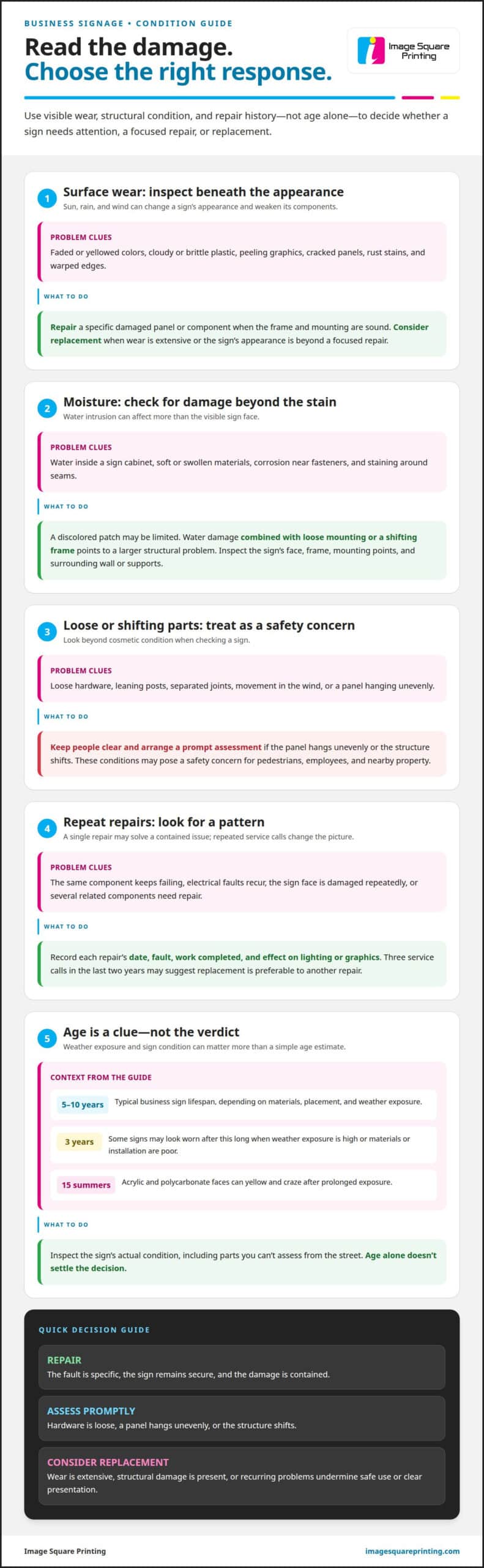
Sun, rain, and wind can change a sign’s appearance and weaken its components. Ultraviolet light fades colors and degrades plastics used in acrylics, vinyl, and coatings. A once-bright face may turn yellow, cloudy, or brittle. Look for peeling graphics, cracked panels, rust stains, and warped edges. These marks show wear, but the condition beneath the surface matters too.
Pay attention to water intrusion because moisture can spread beyond a visible stain. Check for water inside a sign cabinet, soft or swollen materials, corrosion near fasteners, and staining around seams. Water can affect wiring and internal supports, while repeated exposure can worsen cracks. A discolored patch may be a limited issue; water damage combined with loose mounting or a shifting frame suggests a larger structural problem.
During an inspection, examine the sign face, frame, mounting points, and surrounding wall or supports. Look for loose hardware, leaning posts, separated joints, or movement in the wind. These conditions may pose a safety concern for pedestrians, employees, and nearby property. If a panel hangs unevenly or the structure shifts, keep people clear and arrange a prompt assessment rather than treating it as a cosmetic issue.
Some damage is isolated and repairable. A targeted repair may suit a sign with one damaged panel, letter, or component, provided the frame and mounting remain structurally sound. For example, replacing one cracked face can make sense if the supports are stable and the remaining materials are in good condition. Repair is less suitable when corrosion, water intrusion, or broken connections affect multiple structural points.
Weather exposure can speed deterioration, particularly when materials or installation are poor. In those conditions, some signs may look worn after three years. After fifteen summers of exposure, acrylic and polycarbonate faces can yellow and craze. These examples show why age alone doesn’t settle the decision. Inspect the sign’s actual condition, including parts you can’t assess from the street.
Use a practical threshold: repair a specific fault when the sign remains secure and the damage is contained. Consider replacement when extensive wear, structural damage, or recurring problems undermine safe use or clear presentation. If the sign’s appearance is beyond a focused repair, explore visual signage options as you plan the next step.
3. Repeated repairs and ongoing maintenance costs
A single repair can solve a contained problem, but repeated service calls change the financial picture. Keep a record of each repair, including the date, fault, work completed, and effect on lighting or graphics. This history can help distinguish a one-time failure from recurring problems. If the same component keeps failing, each repair may provide less lasting value.
Three service calls in the last two years may suggest replacement is preferable to another repair. Look at the pattern: recurring electrical faults, repeated face damage, or repairs to several related components can mean upkeep is becoming less predictable. Compare the sign’s current condition with the likely scope of the next repair instead of judging each service visit on its own.
A useful comparison is the repair amount against the cost of a new, comparable sign. When a repair costs roughly 50 to 60 percent of replacement, replacement usually produces a better return. This is a decision point, not a universal formula: a focused repair may still make sense if it resolves the issue and the rest of the sign remains serviceable. The price depends on condition, parts, access, and project scope, and is provided after a quote request.
Replacement typically requires a higher upfront investment and a longer timeline than repair or an update. For planning, replacing a single sign cabinet face typically takes 1-2 weeks, while replacing a panel in an existing directory typically takes about a week. A new channel letter storefront sign typically takes 3-4 weeks plus permitting. The sign type and approval process affect the schedule, so distinguish a quick component fix from a larger project.
Use a simple comparison before approving another repair:
- Repair: Best suited to a contained fault when the sign still performs its purpose.
- Update: Consider when the structure works, but graphics or lighting need improvement.
- Replace: Weigh this option when repeated failures or a costly repair threaten dependable performance.
Compare the repair record with the replacement timeline and the sign’s current condition. A repair may minimize immediate disruption, while a larger upgrade requires more planning. If recurring problems keep affecting visibility, factor in permitting and fabrication time, not just the next service visit.
4. Comparing repair, update, and replacement options
Start with three questions: does the sign work, is its structure sound, and does it still meet your business’s needs? A repair addresses a specific fault. An update changes selected elements, such as the face or lighting. Replacement makes sense when the sign no longer performs reliably or its overall design and components need attention. Distinguishing these goals can prevent an unnecessary full installation to solve a small electrical problem.
Targeted repairs suit signs with one contained issue and sound supporting components. A failed light or damaged panel, for example, may be repairable if the wiring, cabinet, and mounting remain in good condition. The key is whether the work addresses the cause, not just the visible symptom. If an electrical fault returns after service or several components fail in sequence, frequent repairs may point to broader deterioration.
An update can bridge the gap between repair and replacement. A new sign face can refresh graphics while preserving a functional cabinet, and an LED retrofit can improve brightness and energy efficiency while keeping the existing frame. A new face combined with an LED retrofit typically takes 2-3 weeks. This approach fits a business whose sign structure works but whose appearance or illumination needs improvement.
Replacement becomes the stronger option when deterioration affects several parts, the sign is no longer dependable, or recurring failures undermine its purpose. Commercial signs more than 10 to 15 years old may have components at or beyond typical service life, with failures tending to cluster. That pattern makes a repair-only approach less attractive if the next installation would soon need additional work.
To compare your options, list the known faults, expected scope of work, and likely effect on visibility. Then weigh the repair against the longer-term value of an update or replacement. Updating often costs less than complete replacement, while repair generally has lower upfront costs and faster turnaround. Those differences matter, but the sign’s condition and likelihood of further problems should guide your decision.
For durable, energy-efficient signage, match materials to the sign’s placement and weather exposure, then consider lighting and future maintenance. LED technology can provide consistent illumination while potentially reducing energy consumption; a retrofit may preserve a sound cabinet. For a new installation, choose a design and construction suited to its location, intended visibility, and upkeep needs.
A practical decision sequence is simple: repair a contained fault, update a sound sign that needs refreshed graphics or lighting, and replace a sign with widespread deterioration or recurring failures. This keeps the choice focused on performance, installation scope, and long-term value rather than age alone.
5. Declining visibility and changing sight lines
A business sign can remain intact yet become harder to notice or read. New construction, tree growth, parked vehicles, or changed traffic flow can block the view. A monument sign that once faced approaching drivers may now sit behind landscaping or at an awkward angle. Compare today’s sightline with the view customers have as they approach the property.
Visibility depends on more than sign size. The International Sign Association identifies five factors: size, sign angle, location, luminance, and contrast. A large sign can still be hard to read if its lettering blends into the background or its illumination is weak. Check whether drivers have enough time to recognize your business and understand the sign’s message.
Readability matters at the speed of passing traffic. At 55 miles per hour, a vehicle covers about 80 feet every second. A practical assessment is to see whether the sign remains legible when driving past at 40 or 45 miles per hour. Focus on the business name, essential wording, and contrast. If those details blur together, a change in layout, lighting, or placement may help.
Obstructions can hide an otherwise effective sign from a key approach. For example, a new building beside the entrance may block a wall sign, while landscaping can obscure the lower portion of a monument sign. Check visibility from each direction customers use, including the driveway and nearby intersection. If one route offers a clear view but another hides the message, the sign’s position or format may need attention.
An illuminated sign should also remain consistently visible after dark. Uneven brightness, dark sections, or glare can reduce legibility, even if the sign is readable in daylight. Compare its performance at different times and viewing angles. If lighting alone is the problem, an update may address it. If the position, scale, or contrast no longer works, broader changes may be needed.
Compare the sign with your current branding and its surroundings. A faded logo or crowded wording can make your business harder to identify, especially when drivers have only a brief view. First identify what affects recognition: distance, angle, obstruction, low contrast, or lighting. Then decide whether a targeted change can restore visibility or the sign no longer suits the site.
When sightlines have changed, plan your next signage project around the approach customers actually take. A clear view, readable message, and strong contrast help the sign do its job from the road.
Image Square Printing: Business Cards
Image Square Printing produces business cards to help carry a refreshed business identity across printed materials. When an exterior sign reflects updated branding, coordinated card designs can create a more consistent impression at meetings, events, and customer handoffs. Retractable banner stands can extend that visual identity beyond the storefront for presentations or event spaces.
Choose business cards when customers or partners need a practical way to keep your contact details. If a signage update is part of a broader brand refresh, consider coordinating materials so each customer touchpoint feels cohesive without replacing signs that still work.
To discuss business cards or related printed materials, contact Image Square Printing.
Make Your Next Brand Update Count
Deciding when to replace your business signage can prompt a broader review of how your brand appears across customer touchpoints. Treat each update as part of a consistent visual system, from the first impression outside to materials people encounter inside or take away. That continuity can make a refreshed identity feel deliberate rather than piecemeal.
Image Square Printing offers retractable banner stands, custom wallpaper printing, and custom wall covering to extend a cohesive look across event spaces and interiors. These printed pieces can complement updated brand materials when you’re planning changes beyond the exterior sign. Choose what supports your next goal, whether you’re creating a polished event display or bringing brand visuals into a space.
When you’re ready to discuss printed materials for your next brand update, contact Image Square Printing. Take the next step with a clear vision for how your business should be seen.
Frequently Asked Questions
When Is It Time to Replace Your Business’s Exterior Sign?
Replace a sign when its message, appearance, or performance no longer serves your business. Deciding when to replace your business signage means looking at its role, not just its age. For example, a sign displaying a former business name may confuse returning customers even if its materials remain intact. If the current sign still communicates clearly, consider whether a focused update can resolve the mismatch.
Can I just replace the face instead of the whole sign?
Yes, replacing only the face can work if the cabinet, frame, electrical components, and mounting remain in usable condition. This can refresh the sign’s message without changing its supporting structure. A face replacement is less suitable if the cabinet leaks, the frame is damaged, or the mounting has shifted. Depending on its scope and location, the project may require permit approval.
Does a worn-out sign actually cost you, customers?
A worn sign can make a business harder to identify and may discourage people deciding whether to enter. Faded lettering, for example, can obscure the business name, while dark letters on an illuminated sign can make it appear partly broken. The effect depends on the sign’s location and what customers need to see. Clear, readable information helps people recognize your business and find its entrance.
How Long Does Signage Typically Last?
Exterior business signs typically last five to ten years, depending on materials, placement, and weather exposure. That range is a planning guide, not a fixed replacement schedule. A sign exposed to harsh sunlight or weather may deteriorate sooner than one in a sheltered position. Regular inspections can reveal fading, loose parts, or other changes before you decide on a larger update.
How long do signs last?
Material and location make a substantial difference. Aluminum, bronze, and other metal signs may last almost indefinitely with proper care, while painted surfaces are less durable. Interior signs shielded from sunlight and ultraviolet rays may also last almost indefinitely. These comparisons show why the sign’s environment matters as much as its age. Consider its material, exposure, and maintenance history when estimating its remaining useful life.
The Core Question: Does Repair Solve the Problem Long-Term?
Repair can solve a problem long-term if it addresses the cause and the rest of the sign remains functional. If one isolated component causes a light to fail, replacing that component may restore performance. If the same fault returns or related parts begin failing, another repair may only postpone broader work. Record what failed and what was repaired to identify recurring issues over time.
How often should business signage be replaced?
There’s no single replacement interval for every business sign. Base your decision on condition, material, exposure, visibility, and whether the sign still reflects your business. A sheltered metal sign may remain serviceable far longer than a weather-exposed sign with painted surfaces. Periodic inspections can reveal deterioration early, while a branding change may justify an update before physical wear becomes a problem.
What are the signs that business signage needs replacement?
Consider replacement if damage extends beyond one repairable component, the supports are unstable, or the message is difficult to read. For example, two dark letters out of six can make an illuminated sign appear broken. Widespread fading, recurring failures, or a design that no longer represents your business can also signal that a repair won’t fully solve the problem.