
A 30% to 37% reduction in wind load is often the only factor standing between a pristine brand display and a shredded heap of material after a heavy storm. When you install mesh banners on scaffolding or construction fences, you aren’t just hanging a sign; you’re managing a complex mechanical load. It’s a high-stakes task where technical precision determines whether your project commands respect or becomes a safety liability.
We understand the frustration of seeing grommets rip out or watching a premium display sag into an unprofessional mess. You need reliability that matches your brand’s prestige. This guide promises to transform your approach by mastering the engineering behind high-wind security. You’ll learn how to maintain professional visual impact while ensuring your installation survives the most demanding environments.
We’ll examine why bungee cords outperform zip ties for flexibility, how to utilize reinforced hems for maximum durability, and the exact grommet spacing needed to distribute stress evenly. From selecting UV-resistant materials that maintain color for two years to navigating local permit requirements, this is your roadmap to flawless execution.
Key Takeaways
- Learn why analyzing windward direction and surface integrity is the first step to preventing structural failure during heavy storms.
- Follow a precise, step-by-step methodology to install mesh banners on fences by establishing a baseline with top-corner alignment.
- Discover how to manage high-altitude wind loads on scaffolding using spring-loaded tensioners to eliminate the dangerous ‘accordion effect’.
- Master professional cleaning protocols that remove road grime and salt without compromising the banner’s ink or material integrity.
- Understand the critical safety procedures for wrapping skyscrapers and the proper way to cut fasteners to preserve the banner for future use.
Pre-Installation: Engineering the Site for Mesh Success
Success begins long before the first fastener is tightened. When you prepare to install mesh banners, you must view the site through the lens of a structural engineer. Analyzing wind velocity isn’t optional; it’s the foundation of a secure display. Identifying the windward side of your structure is critical. On the windward side, the wind pushes the banner against the fence or scaffolding, utilizing the structure’s own strength for support. If you install on the leeward side, the wind creates a vacuum effect that pulls the banner away, putting immense stress on the grommets and hems.
Structural integrity varies wildly between mounting surfaces. A standard chain-link fence can become a massive sail, potentially buckling under high-wind loads if the posts aren’t deeply anchored. Conversely, scaffolding offers a more rigid frame but requires strict adherence to scaffolding safety standards to ensure the added surface area doesn’t compromise the entire rig. Calculating your total square footage is the next step. A 50-foot banner captures significantly more kinetic energy than a 10-foot one. This calculation dictates whether you need standard fasteners or heavy-duty alternatives to maintain tension.
Choosing the right weave ratio is a balancing act between visibility and safety. A 70/30 mesh, featuring a 70% printable surface and 30% airflow, provides the best visual impact for high-resolution graphics. It’s the industry standard for most construction sites and fences. However, in extreme-wind corridors or for skyscraper wraps, a 30/70 weave might be necessary to prioritize airflow over image density. This choice directly impacts the “drag” the banner creates during a storm.
Essential Tools and Hardware for Professional Installs
High-stakes installations require hardware that won’t fail under pressure. Industrial-grade zip ties are common for smaller projects, but stainless steel cable ties are the professional choice for long-term security. Bungee balls and shock cords provide essential “give,” allowing the banner to move slightly rather than snapping under sudden gusts. This flexibility extends the life of the material significantly. For high-impact event displays that require quick swaps, carabiners and snap hooks offer both speed and reliability without compromising the structural hold.
Safety Standards and Permitting for Large-Scale Graphics
Compliance is as important as the print quality itself. Many metropolitan areas have strict wind load requirements for temporary structures. You must check local building codes before you install mesh banners on a large scale. Working at heights introduces OSHA considerations, requiring fall protection and specific rigging protocols. For skyscraper-scale wraps, consulting a structural engineer isn’t just a best practice; it’s often a legal requirement to ensure the building’s facade can handle the lateral force. If the project requires a more permanent solution, you might eventually transition to rigid outdoor signs, but for flexible, high-wind applications, mesh remains the gold standard for safety and impact.
The Step-by-Step Guide to Installing Mesh Banners on Fences
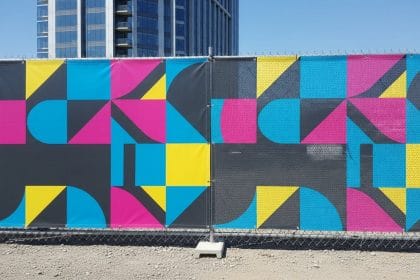
Once you have engineered your site for wind loads, the physical installation requires a methodical approach to ensure a wrinkle-free, professional finish. When you install mesh banners on a standard chain-link fence, you are working with a flexible substrate. This means any error in the initial alignment will amplify as you move down the line. Precision at the start prevents the unprofessional sagging that plagues amateur installs.
- Step 1: Unroll and Align: Begin by unrolling the banner along the base of the fence. Lift the material and align the top edge with the top rail of the fence. Use temporary spring clamps or “pilot” ties to hold the weight while you verify the horizontal level.
- Step 2: Establish the Baseline: Secure the two top corners first. These act as your anchor points. Do not tighten them fully yet; allow for minor adjustments as you establish the tension.
- Step 3: The Center-Out Technique: Move to the exact horizontal center of the banner. Secure the center grommet to the top rail, then work your way outward toward the corners. This prevents the “V-shaped” sag that occurs when you only pull from the ends.
- Step 4: Tension the Perimeter: Once the top is secure, move to the bottom edge. Again, start from the center and work outward. Finally, secure the vertical sides, pulling with consistent pressure to eliminate any remaining ripples.
- Step 5: Final Inspection: Check every grommet for excessive stress. If a grommet looks distorted, loosen the fastener. Trim the “tails” of your zip ties flush to the head to prevent sharp edges and maintain a clean aesthetic.
The ‘Center-Out’ Method for Wrinkle-Free Display
Starting at the corners and moving inward almost always leads to a surplus of material in the center. This creates unsightly waves that catch the wind and increase the risk of tearing. By using temporary pilot ties, you can maintain the position of a 50-foot banner while you execute the center-out method. This technique ensures even horizontal tension across the entire span. For those managing high-visibility projects, achieving this level of tautness is what separates a basic sign from a premium brand statement. If your project requires this level of detail, consider our large format printing services to ensure your graphics are as precise as your installation.
Managing Excess Material and Overlaps
Fence lines rarely run in a perfectly straight line. When you encounter a 90-degree turn, do not wrap the banner tightly around the post. Instead, use a “mitered” fold, tucking the excess material behind the banner and securing it through both layers of grommets. If you are overlapping multiple mesh panels, aim for a 1-inch to 2-inch overlap. This ensures visual continuity of the graphic while preventing wind from getting behind the leading edge. Always secure the tail of every fastener. A clean, flush cut on a zip tie isn’t just about looks; it’s a safety protocol that prevents injury to pedestrians or workers passing by the installation.

Advanced Mounting: Scaffolding, Walls, and Skyscrapers
Mounting graphics to rigid or high-altitude structures requires a shift from simple tensioning to sophisticated load management. When you install mesh banners on scaffolding or skyscrapers, the stakes involve both brand prestige and public safety. Unlike a chain-link fence, these surfaces don’t flex, meaning the banner must absorb every pound of pressure or allow it to pass through via its open-airflow weave. Precision here isn’t just about aesthetics; it’s about structural integrity.
Scaffolding wraps present a unique challenge due to mechanical vibration and the sheer height of the install. While mesh already provides a 30% to 37% reduction in wind load, professionals often incorporate wind slits in critical areas of the wrap. This combination ensures safety during peak gusts. On skyscraper-scale projects, we rely on perimeter wire ropes. These steel cables are tensioned through the banner’s hems, distributing the load across the building’s structural anchors rather than relying solely on individual grommets.
If you’re mounting to a solid wall, the lack of airflow behind the material can create a parachute effect. We solve this by using stand-off mounts. These hardware sets create a 1-inch to 2-inch gap between the masonry and the mesh, allowing air to circulate freely. For projects where the graphic will remain in place for years, many clients transition from temporary mesh to permanent outdoor signs made of aluminum or acrylic. However, for short-term construction or renovation covers, mesh remains the superior choice for managing lateral forces.
Scaffolding Wraps: Securing Construction Sites
Securing mesh to scaffolding requires fastening to both horizontal and vertical ledger pipes to prevent pocketing. It’s vital to integrate the mesh with existing safety netting to ensure compliance with site regulations. For a deeper dive into these protocols, consult our guide on banners for construction sites. Consistent tension is the goal; any loose material will flap against the metal pipes, leading to premature abrasion and potential tearing during a storm.
Wall-Mounted Mesh: Anchoring to Masonry and Concrete
Anchoring to masonry requires technical precision. We recommend using 1/4-inch masonry anchors paired with 1-inch fender washers. The washers prevent the grommets from pulling over the anchor heads during high-wind events. Your drilling pattern should distribute the load evenly across the wall surface rather than concentrating it in the corners. Finally, always seal each anchor point with a high-grade silicone to prevent water intrusion into the building’s substrate, protecting the property’s long-term value while maintaining a professional visual impact.
Tensioning and Wind Load Management
Mastering tension is the final hurdle to a successful display. When you install mesh banners, the goal is a surface that is drum-tight but capable of micro-adjustments. Many installers make the mistake of leaving slack for the wind. This creates the dangerous Accordion Effect. Slack allows the banner to flap, gaining kinetic energy and momentum before it snaps against the fastener. This sudden shock-load is what causes grommets to rip out. A taut banner, by contrast, distributes the wind’s energy across the entire perimeter simultaneously.
Using the right hardware to install mesh banners ensures the material doesn’t become a liability. We recommend spring-loaded tensioners for long-term outdoor durability. These devices maintain consistent pressure even as the material naturally stretches. For high-stress areas, especially on large-scale graphics, load-spreader plates are essential. These plates sit behind the grommet, increasing the surface area of the fastener and preventing the metal ring from pulling through the mesh. While 8oz mesh is the industry standard for its weight-to-airflow ratio, its breaking point is lower than heavy 13oz solid vinyl. However, because mesh reduces wind load by 30% to 37%, it actually survives higher gusts when tensioned correctly.
Preventing Grommet Failure and Tearing
Perimeter strength is the heartbeat of your installation. Reinforced webbing, a heavy-duty polyester strap sewn into the hem, is the secret to high-wind survival. We prefer heat-welded hems for mesh because they fuse the fibers together, creating a bond stronger than the material itself. Double-stitching is reliable, but it creates needle holes that can become failure points in high-stress environments. For the most demanding skyscraper or bridge projects, D-rings offer a significant upgrade over traditional grommets. They provide a secure metal-to-metal connection that won’t distort under pressure.
Seasonal Adjustments for Year-Round Displays
Outdoor conditions change, and your installation must adapt. Cold weather makes PVC mesh less flexible and more prone to cracking if over-tensioned. Thermal expansion means your banner will tighten in the winter and loosen in the summer. We suggest a maintenance check every six months to inspect fasteners for UV brittleness. Plastic zip ties often become brittle after half a year of direct sun exposure, losing their tensile strength. If you’re ready to upgrade your site with a professional-grade display, explore our large format printing solutions designed for durability in any climate.
Professional Maintenance, Removal, and Storage
A high-stakes branding project doesn’t end once you successfully install mesh banners. It continues through a rigorous lifecycle of maintenance and careful removal. Many professionals overlook this phase, treating banners as disposable assets. However, maintaining the physical quality of your output preserves brand prestige for future deployments. When it’s time to take the display down, precision is paramount. Use specialized snips to cut fasteners, ensuring the blade never touches the reinforced hem. A single nick in the webbing can compromise the structural integrity required for a future re-install, turning a premium asset into a liability.
The removal process should be as methodical as the installation. Start from the bottom and work your way up, allowing the banner to remain supported by the top fasteners until the very last moment. This prevents the material from falling and dragging across abrasive surfaces like concrete or asphalt. If you’re working on a large-scale project, having a second technician to support the weight as fasteners are cut is essential for safety and material preservation.
Cleaning and Ink Preservation
Metropolitan environments subject graphics to road grime, diesel exhaust, and salt. These contaminants can dull the vibrant colors of your mesh over time. We recommend using a mild, non-abrasive detergent specifically formulated for PVC-coated polyester. Apply the solution with a soft-bristle brush or microfiber cloth to gently lift surface dirt. Never use high-pressure washers. The concentrated stream can “blow out” the mesh weave, distorting the airflow ratio we discussed in the engineering section. Once cleaned, ensure the banner is 100% dry before storage. Trapped moisture leads to mold and mildew, which can permanently stain the printable surface and create unpleasant odors.
Long-Term Storage Solutions
Proper storage is the difference between a crisp display and a wrinkled mess. You must roll your mesh banners; never fold them. Folding creates permanent creases that catch the light and eventually crack the UV-resistant ink. We suggest using heavy-duty core tubes to maintain the banner’s shape. This prevents the material from collapsing under its own weight during long-term storage. Keep these tubes in a climate-controlled environment, ideally between 60°F and 75°F with moderate humidity. Extreme heat can cause the PVC to become tacky, leading to “blocking” where the banner surface sticks to itself.
Managing high-visibility projects requires a partner who understands these technical nuances. Image Square Printing provides the technical precision needed to ensure your graphics withstand the elements and remain ready for repeated use. Whether you’re managing a recurring seasonal event or a long-term construction wrap, our commitment to detail brings your vision to life with reliability. By following these professional protocols, you ensure your investment remains a high-impact asset for your business.
Elevate Your Site Security and Visual Impact
Mastering the mechanics of airflow and tensioning transforms a simple sign into a resilient structural asset. You’ve learned how to analyze windward loads, execute the center-out fastening method, and manage the long-term integrity of your materials through professional storage and cleaning. When you install mesh banners using these engineering principles, you eliminate the risks of sagging and grommet failure that compromise so many high-visibility projects. This technical rigor ensures your brand remains a prestigious landmark on any construction site or skyscraper facade.
Reliability in high-stakes environments requires a partner who understands the demanding standards of modern business. With over 20 years of large-format expertise, we provide the precision finishing, including reinforced hems and grommets, that your brand deserves. From national shipping to streamlined corporate portal management, we remove the friction from your production process and deliver results that stand firm against the elements. We’re committed to bringing your vision to life with the technical mastery your project requires.
Get a Professional Quote for Custom Mesh Banners and Installation Support today. Let’s build a display that commands attention and survives the storm with quiet confidence.
Frequently Asked Questions
Can I install a mesh banner by myself, or do I need a team?
For banners exceeding 10 feet in length, a team of two or more is essential for a professional finish. One technician manages the alignment while the others secure the fasteners to prevent the material from dragging or catching the wind prematurely. Small displays under 6 feet might be manageable solo, but high-stakes results usually require a second set of hands to maintain consistent horizontal tension.
What is the best type of fastener for a mesh banner in a high-wind area?
Stainless steel cable ties or bungee balls with nylon shock cords are the superior choices for high-wind environments. Unlike standard plastic zip ties that become brittle under UV exposure, these materials offer the flexibility and tensile strength needed to absorb sudden gusts. They provide the necessary “give” that prevents the grommets from bearing the full kinetic force of the wind during a storm.
How tight should a mesh banner be once it is installed?
The banner should be drum-tight with no visible ripples or sagging, but it shouldn’t be under extreme mechanical stress. When you install mesh banners, the goal is a surface that doesn’t flap. A flapping banner creates a shock-load effect that eventually destroys the grommets. If you can see the material vibrating significantly in a light breeze, the tension needs immediate adjustment to prevent tearing.
Will a mesh banner damage the fence it is attached to?
A mesh banner can damage a fence if the structure isn’t rated for the added wind load. While mesh allows 30% to 37% of air to pass through, it still captures significant kinetic energy. Standard chain-link posts can bend or pull out of the ground during severe weather events. Always verify that your fence posts are set in concrete before attempting a large-scale installation on a perimeter.
How do I calculate the wind load for a large mesh banner?
Wind load is calculated by multiplying the banner’s surface area by the wind pressure, then adjusting for the material’s airflow percentage. For high-stakes projects, professionals use the ASCE 7 standard for wind loads on structures. This often requires a professional engineer to ensure the mounting surface and fasteners can withstand the lateral force of peak gusts in your specific geographic region and altitude.
Can mesh banners be installed on top of existing vinyl banners?
No, you should never install mesh banners directly over existing vinyl banners. Doing so creates a solid barrier that completely negates the wind-reduction benefits of the mesh weave. This setup traps air between the two layers, significantly increasing the risk of structural failure for both the banners and the mounting surface. Always remove old graphics to ensure proper airflow and safety.
What happens if a grommet rips out during installation?
If a grommet fails, you must immediately stop and reinforce that section with a load-spreader plate or a specialized adhesive tab. Simply moving to the next grommet will create an uneven distribution of stress, leading to a chain reaction of failures across the perimeter. Professionals often double-up on fasteners at the corners where the most intense wind pressure occurs to prevent this issue from starting.
How often should I inspect the fasteners on my outdoor mesh banner?
You should perform a physical inspection of all fasteners every six months to ensure long-term security. Check for signs of UV degradation, such as yellowing or cracking in plastic ties, and ensure that metal anchors haven’t vibrated loose from masonry or scaffolding. In areas prone to high-wind seasons, a pre-storm inspection is a best practice to verify that tension remains even across the entire display.