
Your PVC signs are a high-stakes investment in your brand’s prestige, but a single application of the wrong chemical cleaner can turn that professional asset into a brittle, yellowed liability. It’s a common anxiety for many businesses; the fear that a routine cleaning will lead to permanent scratches or faded graphics is well-founded in an industry where precision is everything. You’ve invested in high-quality visual solutions to stand out. To keep them sharp, you must learn the technical protocols to maintain pvc signs without compromising their structural integrity or visual clarity.
This professional guide provides the repeatable strategy required to preserve both the physical substrate and the psychological impact of your brand. You’ll master the exact cleaning agents that won’t compromise your custom graphics, learn how to store materials between events to avoid structural damage, and discover how to extend your signage lifespan by several years. We’re moving from basic maintenance to strategic asset management, ensuring every sign remains a crisp, authoritative reflection of your business through every trade show and site installation. By following these industry standards, you ensure your signs deliver a premium impression long after the initial installation.
Key Takeaways
- Identify why high-density PVC remains the industry standard for professional durability and how its material properties dictate specific care requirements.
- Master a professional cleaning protocol to maintain pvc signs using non-ionic detergents and the “Top-Down” method to eliminate streaks and surface debris.
- Develop an environmental strategy to mitigate the effects of thermal expansion and UV exposure, ensuring your signs remain rigid and vibrant in any setting.
- Implement the “Vertical Storage” rule and use protective glassine layering to prevent pressure marks and scratches during transport and long-term storage.
- Execute a Brand Impact Audit to make data-driven decisions on whether to refurbish existing inventory or invest in new high-visibility signage solutions.
Understanding PVC Material: Why Maintenance Matters for Your Brand
Polyvinyl chloride (PVC) is more than just a plastic; it’s a high-density, rigid substrate engineered for high-impact visual communication. In the competitive landscape of retail and trade shows, PVC signs have become the industry standard because they offer a sophisticated, matte finish that doesn’t glare under harsh exhibition lighting. This material provides a weight and presence that lighter foam cores simply cannot match. However, this professional appearance is only as permanent as your care routine. To effectively maintain pvc signs, you must recognize that their architectural quality depends on the chemical integrity of the substrate. While durable, PVC is surprisingly vulnerable to harsh industrial solvents and abrasive cleaning tools. Using the wrong chemical can lead to irreversible surface etching, turning a premium brand asset into a dull, unprofessional liability.
The Anatomy of a Professional PVC Sign
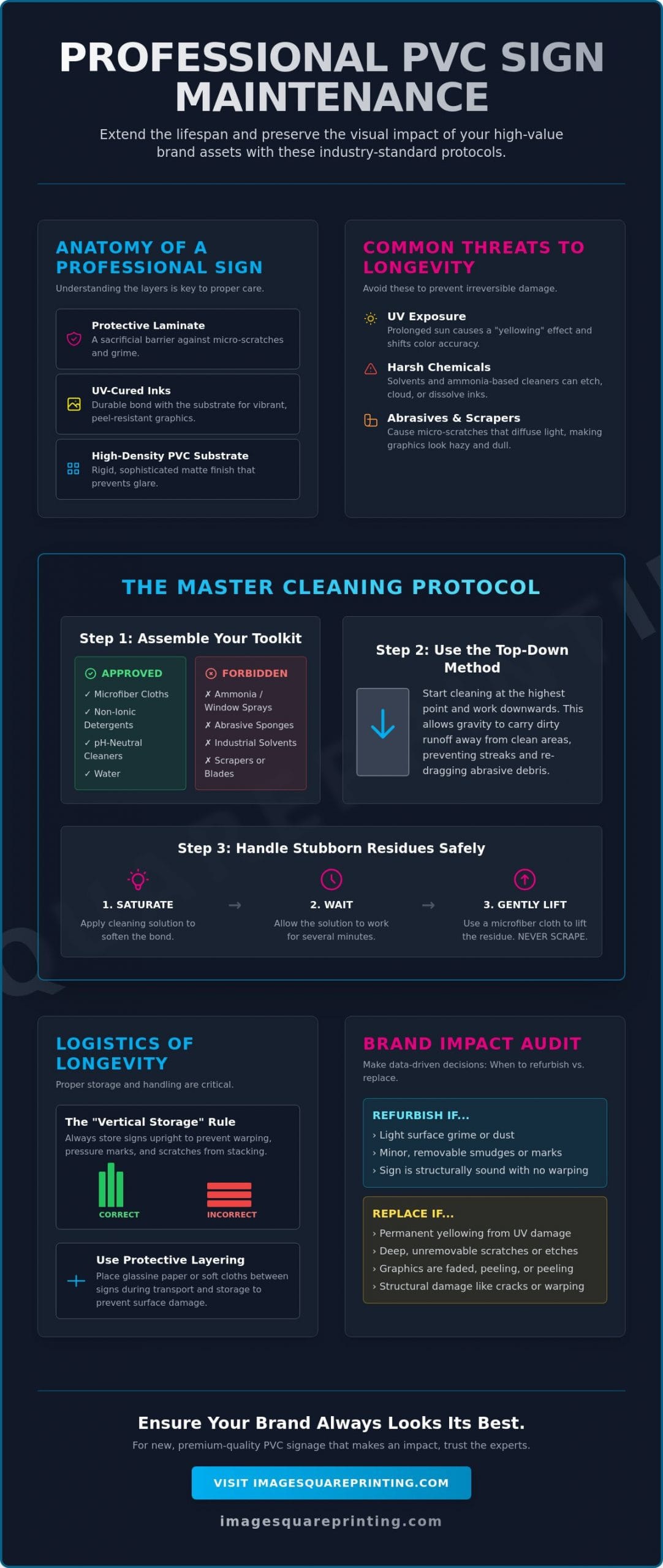
A premium sign is a multi-layered technical assembly. High-end production utilizes UV-cured inks that create a durable bond with the PVC substrate, ensuring the graphics don’t peel or flake during transport. For high-traffic environments, a protective laminate layer is often essential. This lamination acts as a sacrificial barrier, absorbing micro-scratches and environmental grime that would otherwise degrade the high-resolution imagery beneath. Understanding this layering helps you choose cleaning methods that protect the ink’s bond rather than stripping it away.
Common Threats to PVC Longevity
The most persistent enemy of PVC is unmanaged UV exposure. Over time, solar energy can trigger a “yellowing” effect in the material’s white base, which shifts the color accuracy of your brand’s palette. While the core is rigid, the surface remains susceptible to abrasives. Micro-scratches don’t just damage the ink; they diffuse light, causing your once-vibrant graphics to look hazy and washed out. Additionally, porous edge-cuts on standard boards can trap industrial pollutants and dust. Without a proactive maintenance protocol, these particles can migrate into the board, creating unsightly dark borders that diminish the clean, professional aesthetic you need to project.
Consistent maintenance is not about occasional dusting. It’s about preserving the structural and visual standards of your brand’s physical presence. When you maintain pvc signs with technical precision, you protect the high-stakes investment you’ve made in your marketing collateral. This proactive approach ensures that every time a client sees your signage, they see a brand that is meticulous, reliable, and committed to excellence.
The Master Cleaning Protocol: Step-by-Step Guidance
Maintaining the pristine visual impact of your signage requires a disciplined approach to hygiene that goes beyond a quick wipe-down. To effectively maintain pvc signs, your team needs a professional cleaning kit centered around high-quality microfiber cloths and non-ionic detergents. These pH-neutral cleaners ensure that you don’t inadvertently dissolve the UV-cured inks or compromise the substrate’s finish. When handling larger installations, referring to official PVC sheet safety and handling guidelines ensures that your maintenance team follows OSHA-compliant protocols for workplace safety while preserving the material’s integrity.
The “Top-Down” method is the industry standard for a reason. By starting at the highest point of the sign and working your way down, you ensure that gravity carries dirty runoff away from already-cleaned sections. This prevents the abrasive debris you’ve just lifted from being dragged back across the surface, which is a primary cause of micro-scratching. For stubborn residues like bird droppings or adhesive tape, never use a scraper. Instead, saturate the area with your cleaning solution for several minutes to soften the bond before gently lifting it with a cloth.
Selecting Safe Cleaning Agents
It’s vital to avoid ammonia-based cleaners, such as standard window sprays, on printed PVC. Ammonia can cloud the surface and eventually eat into the ink layers. The optimal cleaning solution is a simple ratio of one to two drops of mild, non-citrus dish soap per gallon of lukewarm water. If you encounter heavy adhesive residue on the unprinted edges of the board, you can use 70% isopropyl alcohol sparingly. Apply it to a cloth first, never directly to the sign, and keep it away from the high-resolution printed areas to avoid color bleeding.
Techniques to Prevent Surface Abrasion
Precision handling is the difference between a sign that lasts five years and one that fails in twelve months. You must prioritize “blotting” over “scrubbing,” especially on areas with high ink density. Paper towels are surprisingly abrasive; they contain wood pulp that can leave permanent swirls on your graphics. Additionally, wiping dry PVC generates static electricity that acts as a magnet for dust and pollutants. Always ensure the surface is slightly damp during the cleaning process to neutralize this charge. If your current inventory shows signs of permanent staining that no amount of professional cleaning can resolve, it might be time to refresh your brand with new PVC signs that feature modern UV-resistant coatings.
To finish the process and avoid water spots on high-gloss finishes, use a clean, dry microfiber cloth to blot the surface. Avoid letting the sign air-dry in direct sunlight, as this can bake mineral deposits from the water into the surface, creating dull patches that diminish your brand’s prestige.
Environmental Strategy: Managing UV and Temperature Exposure
While a rigorous cleaning routine is essential, the environment in which you place your signage dictates its ultimate lifespan. To effectively maintain pvc signs, you must account for the specific properties of polyvinyl chloride, particularly its thermal sensitivity and reaction to ultraviolet radiation. Unlike metal or aluminum, rigid PVC is a thermoplastic that responds dynamically to its surroundings. In high-stakes commercial environments, failing to anticipate these environmental stressors leads to structural warping and color shifting that no amount of professional cleaning can resolve.
Strategic placement is your first line of defense. For outdoor directional signage, positioning boards to avoid the most intense midday UV exposure can prevent the premature breakdown of the material’s molecular bonds. In high-humidity coastal regions, moisture ingress at the edge-cuts can be a silent killer. Salt and pollutants carried by moisture can penetrate the porous edges of unsealed boards, leading to internal delamination. By contrast, indoor retail displays face a different challenge; they are often subject to localized heat from high-intensity lighting or HVAC vents, which can cause subtle but noticeable bowing over time. Monitoring these micro-climates is essential for protecting your visual assets.
UV Protection for Outdoor PVC
The application of a UV-resistant laminate is a non-negotiable standard for any sign intended for long-term outdoor use. This microscopic barrier filters out the wavelengths responsible for “yellowing” the white substrate and fading the high-resolution inks. You can identify early signs of UV degradation by checking for a loss of surface sheen or a slight chalky residue on the material. For permanent installations, consider a seasonal rotation strategy. Moving signs between different elevations or orientations every six months ensures even wear and prevents one side of your brand’s visual assets from aging faster than the rest of your inventory.
Temperature Control and Warping Prevention
Rigid PVC maintains its structural integrity best within a temperature range of 30°F to 100°F. When temperatures exceed this threshold, the material becomes more pliable. If your signs are mounted too tightly with rigid fasteners, they will “bow” or “pillow” as they expand against the restriction. Professional mounting hardware allows for this natural movement without sacrificing security. For complex installations, refer to our specialized hardware for outdoor signs to ensure your boards have the necessary “float” to handle thermal expansion. This proactive mounting strategy prevents permanent deformation and keeps your brand’s presence looking crisp and architectural regardless of the weather.
Logistics of Longevity: Professional Storage and Handling
When the event ends, the real work of preservation begins. Many businesses mistakenly believe that once a sign is off the display floor, the risk of damage disappears. In reality, the “off-season” is when most physical degradation occurs. To effectively maintain pvc signs, you must treat storage as a strategic logistics task rather than an afterthought. Stacking large-format boards horizontally is a common but costly error; the cumulative weight of a stack creates “pressure marks” or ghosting that can permanently distort the smooth surface finish of the bottom boards.
The “Vertical Storage” rule is non-negotiable for professional-grade assets. Signs should be stored upright on their longest edge, ideally in a custom-built rack that provides individual support for each board. Between every sign, you must place a layer of acid-free glassine paper or thin polyethylene foam sheets. This interleaving prevents the printed surfaces from sticking together or transferring ink during temperature shifts. While a standard warehouse might seem sufficient, a climate-controlled environment is the gold standard. High humidity can compromise the porous edges of the board, while extreme cold can make the PVC brittle and prone to cracking during the next deployment.
Preparing Signs for Long-Term Storage
Never put a sign into storage without a final technical inspection. Follow the “Clean Before Store” mandate to ensure no environmental pollutants or skin oils are trapped against the graphics for months at a time. If grime bonds to the surface during a long storage cycle, it becomes significantly harder to remove without damaging the print later. Wrap the corners and edges in reinforced cardboard or foam bumpers to prevent chipping during movement. For inventory management, use hang-tags or external crate labels. You should never apply adhesive stickers directly to the sign surface, as the residue can become a permanent blemish that attracts dust.
Handling Best Practices for Staff
Professional handling requires technical discipline and the right equipment. We recommend that staff wear clean cotton gloves when moving PVC and styrene signs to prevent skin oils from transferring to the ink. These oils can cause subtle chemical reactions over time that dull the finish and attract pollutants. For large-format prints, always use a two-person lift protocol to avoid the flexing and “snapping” motion that causes micro-cracking in the substrate. Finally, avoid the “lean.” Leaving a sign angled against a wall for even a few hours can lead to permanent bowing that ruins the architectural flat-lay of your next installation.
If your current storage protocols have already resulted in warped or scratched inventory that no longer reflects your brand’s prestige, order professional-grade PVC signs to replace your damaged assets with durable, high-impact alternatives built for the rigors of frequent transport.
Maintaining Brand Integrity: When to Refurbish vs. Replace
A sign is a silent proxy for your brand’s commitment to quality. While the technical protocols to maintain pvc signs will significantly extend their service life, every physical asset eventually reaches a crossroads between refurbishment and replacement. To protect your brand’s prestige, you must conduct a periodic Brand Impact Audit. This isn’t just a check for structural damage; it’s a critical evaluation of whether the signage still reflects the sophisticated, high-end standards of your business. If a sign appears dull, outdated, or weathered, it stops being a marketing tool and starts becoming a brand liability.
Distinguishing between surface-level grime and permanent degradation is the first step in this audit. If you’ve followed the master cleaning protocol and the graphics still appear muted, you’re likely dealing with UV-induced ink fading or substrate yellowing. Unlike surface dirt, these chemical changes are irreversible. There’s a hidden cost to displaying poorly maintained signage; a “fixed” sign that looks DIY or unprofessional can damage client trust more than a missing sign ever could. When the visual impact is compromised, the most results-oriented decision is to commission a fresh installation that meets your current brand specifications.
The Tipping Point for Replacement
Replacement becomes a safety and brand necessity when the PVC substrate exhibits structural brittleness. Over-exposed PVC can become “glassy,” meaning it may shatter rather than flex under pressure. Additionally, if your corporate brand guidelines have evolved, even a pristine older sign can create visual friction for your audience. When color shifts move outside of your acceptable brand delta, it’s time to retire the asset. For detailed technical specifications on material grades and longevity, consult our Ultimate Guide to PVC Signs to ensure your next investment aligns with your long-term visibility goals.
Professional Refurbishment Options
In cases where the substrate remains structurally sound but the surface has lost its luster, professional refurbishment can be a viable path. This might involve re-laminating existing boards to restore a high-gloss finish and reinforce UV protection. Minor surface scuffs on unprinted areas can sometimes be buffed out by a master craftsman, though this requires precision to avoid creating “hazy” patches. However, if the board itself is in excellent condition but the graphics are tired, a fresh large format poster print can be applied as a high-quality overlay. This approach allows you to maintain pvc signs as a core asset while frequently updating the high-impact messaging that drives your business forward.
Secure Your Brand’s Visual Future
Mastering the technical protocols to maintain pvc signs ensures your high-stakes visual investments remain as crisp and architectural as the day they were installed. By implementing a disciplined cleaning routine, managing environmental stressors, and adhering to vertical storage rules, you protect the high-resolution impact of your brand. These strategies move your signage from simple decor to a long-term strategic asset. When signs eventually age beyond the point of professional refurbishment, it’s vital to partner with a master craftsman who understands the demanding standards of modern business.
With over 20 years of large-format expertise, we provide high-resolution UV printing designed for maximum fade resistance and durability. Whether you need national shipping or professional installation support, we’re committed to bringing your creative vision to life with technical precision. Order Professional PVC and Styrene Signs for Your Next Project and experience the reliability of a partner obsessed with every detail. Your brand deserves nothing less than a flawless presentation that commands attention and inspires confidence.
Frequently Asked Questions
How often should I clean my outdoor PVC signs?
Outdoor signs should be cleaned at least once every three months to prevent pollutant buildup. If your signage is located near a high-traffic urban corridor or a coastal area with salt spray, increase this frequency to once a month. Regular inspections allow you to catch environmental debris before it bonds to the UV ink layers. This proactive schedule is the best way to maintain pvc signs and ensure your brand maintains its crisp, professional finish year-round.
Can I use a pressure washer to clean large PVC banners or boards?
You should never use a pressure washer on rigid PVC boards or banners. The concentrated force can strip the UV-cured ink or cause the high-density substrate to crack under the impact. Instead, use a low-pressure garden hose for a preliminary rinse and follow the master cleaning protocol with a microfiber cloth. This manual approach prevents structural damage while ensuring a streak-free, high-impact result that reflects your commitment to quality.
What is the best way to remove adhesive residue from a PVC sign?
The most effective method is to saturate the residue with a mild adhesive remover or 70% isopropyl alcohol applied to a cloth. Never apply chemicals directly to the sign surface. Allow the solution to sit for two minutes to soften the bond, then gently blot the area. This technique is essential to maintain pvc signs without leaving behind ghost marks or permanent surface scratches that diminish your brand’s prestige.
How do I prevent my PVC signs from yellowing in the sun?
Prevention starts with specifying a high-quality UV-resistant laminate during the production phase. This barrier filters out the radiation that causes the white substrate to shift toward a yellow hue. Additionally, position your signs to avoid the most intense midday sun. If the material has already begun to yellow, it indicates molecular breakdown that cannot be reversed through cleaning, making replacement the only professional option to preserve your corporate brand guidelines.
Is it safe to use Windex or glass cleaner on printed PVC?
Standard glass cleaners are not safe for printed PVC signs because they often contain ammonia or harsh alcohols. These chemicals can cloud the matte finish and eventually dissolve the bond between the ink and the substrate. Stick to a pH-neutral solution of mild dish soap and lukewarm water. This ensures you preserve the high-resolution clarity and brand prestige of your visual assets without risking chemical etching or color bleeding.
How should I store my PVC signs between annual trade shows?
Store your signs vertically on their longest edge in a climate-controlled environment with temperatures between 60°F and 75°F. Use acid-free glassine paper or foam sheets between every board to prevent ink transfer or sticking. Avoid stacking them horizontally, as the weight of the boards can lead to permanent pressure marks that ruin the architectural flat-lay required for professional trade show displays and high-stakes corporate presentations.
Can I repair a crack in a rigid PVC sign board?
There is no professional-grade way to repair a structural crack in a rigid PVC board. While DIY adhesives exist, they leave visible seams that compromise your brand’s visual impact and prestige. A cracked board is also a safety liability, as it has lost its structural integrity. For high-stakes projects, the most reliable solution is to replace the board to ensure a flawless, authoritative presentation that meets modern business standards.
What should I do if my PVC sign starts to warp or bow?
If warping occurs, first check your mounting hardware to ensure it isn’t too tight, as this prevents natural thermal expansion. You can sometimes rectify minor bowing by placing the sign on a flat, clean surface in a warm room for 24 hours. However, if the warp is caused by extreme heat exposure exceeding 120°F, the deformation is likely permanent and requires a replacement sign with a thicker substrate for better stability.