
Your signage is the first thing a client touches with their eyes, yet many businesses treat it as a temporary afterthought rather than a permanent architectural asset. You likely realize that a thin, flimsy sign can undermine even the most prestigious brand identity. Finding a material that balances a premium aesthetic with long-term durability is a common challenge, especially when you need to navigate complex mounting options for different wall surfaces. By exploring various acrylic signs applications, you can transform your commercial environment from a mere office into a high-impact brand experience that commands respect.
We understand that you want your physical space to reflect the same level of expertise you bring to your own clients. This article will show you how to leverage the versatility of acrylic to enhance brand prestige, improve wayfinding, and create visual environments that leave a lasting impression. We’ll examine the latest 2026 design trends, including minimalist 3D textures and refined halo lighting. You will also find essential guidance on meeting current ADA standards and the March 2026 MUTCD requirements to ensure your sophisticated new graphics are as functional and compliant as they are beautiful.
Key Takeaways
- Understand why cast polymers provide the high-refractive clarity of glass with significantly improved impact resistance for high-traffic commercial areas.
- Identify high-impact acrylic signs applications for corporate reception areas and executive suites to establish immediate brand authority and prestige.
- Learn how to guide customer behavior in retail and hospitality settings using backlit displays and precision-engineered point-of-purchase graphics.
- Upgrade your event presence by incorporating custom acrylic accents into trade show materials to create depth and visual sophistication that attracts attention.
- Gain clarity on technical specifications like diamond-polishing and material thickness to ensure your finished signage meets professional architectural standards.
Defining Acrylic Signs for Modern Architectural Branding
To define the modern commercial environment, you must look beyond simple utility. High-performance branding relies on materials that communicate stability and sophistication through every square inch of the workspace. This is where Poly(methyl methacrylate), the scientific name for acrylic, becomes a strategic asset. Often marketed under trade names like Plexiglass, this high-grade cast polymer provides a crystalline clarity that mimics glass while eliminating the inherent risks of fragility and excessive weight. It is the gold standard for businesses that refuse to compromise on visual impact.
While some view acrylic as a mere glass substitute, its true value lies in its unique optical properties. Acrylic possesses superior light refraction, allowing light to enter the material and illuminate the pigments from within. This creates a vibrant “glow” and perceived depth that standard vinyl or foam boards simply cannot replicate. In the context of 2026 branding trends, which favor bold minimalism and “floating” architectural elements, acrylic serves as the primary medium for high-end visual storytelling. Understanding these technical nuances is essential for successful acrylic signs applications in a professional setting. It is not just about placing a logo on a wall; it is about how that logo interacts with the surrounding architecture.
Why Acrylic Outperforms Glass in Commercial Settings
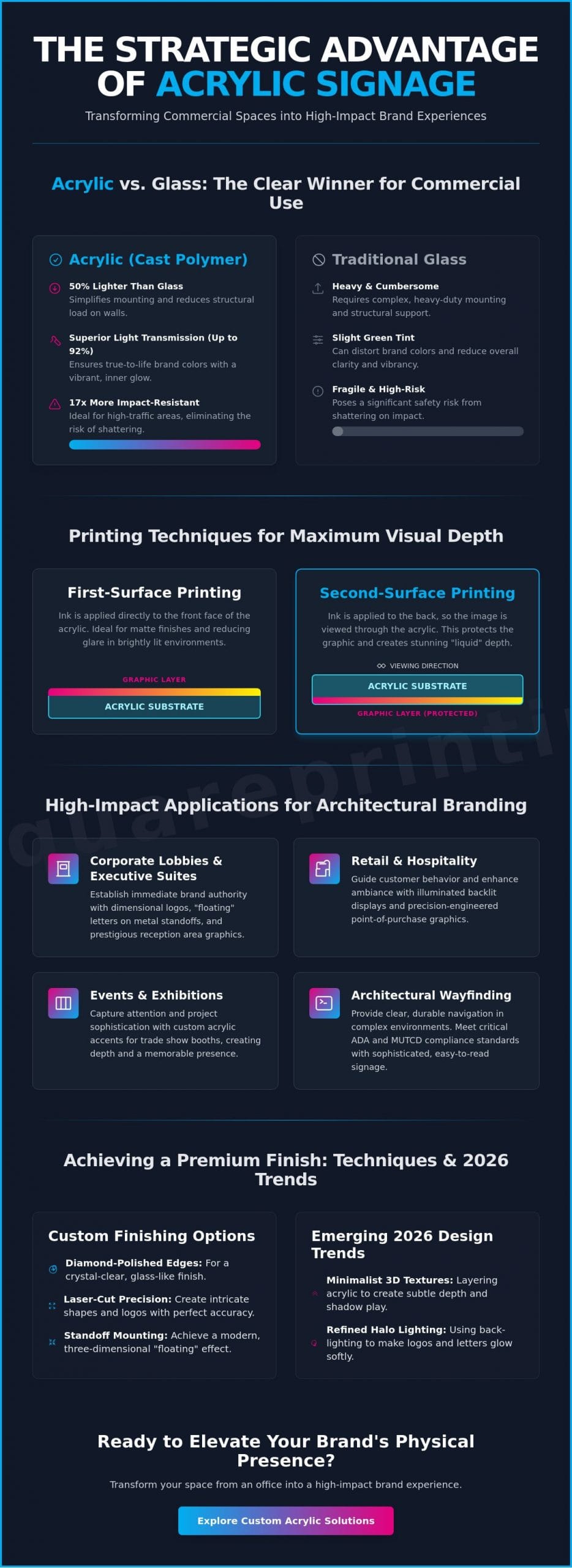
When you select materials for public-facing environments, safety and structural integrity are non-negotiable. Acrylic is 50% lighter than glass, which simplifies the mounting process and reduces the load on interior walls. Despite its lighter profile, it remains 17 times stronger than plate glass. This durability is critical for high-traffic zones where accidental impact is a constant risk. Additionally, while standard glass often carries a slight green tint, acrylic transmits up to 92% of light. This ensures that your brand colors remain accurate, crisp, and vibrant under any lighting condition.
First-Surface vs. Second-Surface Printing
The visual outcome of your project depends heavily on the printing technique used. First-surface printing applies the ink directly to the front of the material. This is the preferred choice for matte finishes or when you need to eliminate glare in brightly lit lobbies. Conversely, second-surface printing involves applying the graphic to the back of the clear sheet. This method protects the image from surface scratches and creates a stunning “liquid” depth as the viewer looks through the thickness of the material. This technique is particularly effective for acrylic photo prints and premium corporate logos that require a high-gloss, prestigious finish.
Corporate Identity: Elevating Professional Environments
A business’s physical space communicates its values before a single word is spoken. If your lobby signage looks temporary, clients may assume your commitment is too. High-end acrylic signs applications bridge the gap between architectural design and corporate messaging. These installations serve as permanent brand pillars that signal stability and attention to detail. Whether it’s a massive reception logo or subtle executive suite identification, the right material choice transforms a standard office into a curated environment that commands respect.
The goal is to create a seamless experience where the architecture and the brand are indistinguishable. When you invest in premium graphics, you aren’t just buying a sign; you’re building trust. This is particularly true for complex office layouts where navigation can be a source of friction for visitors. Effective Architectural Wayfinding relies on durable, clear signage that guides guests without overwhelming the interior design. Acrylic provides the perfect balance of visibility and sophistication for these critical touchpoints.
Lobby Branding and Dimensional Logos
First impressions are made in the reception area. To create a high-impact visual, many firms combine laser-cut acrylic letters with metal standoffs. This creates a “floating” three-dimensional effect that adds depth and plays with the room’s lighting. For a more complex aesthetic, you can layer clear or frosted acrylic over custom wall coverings. This multi-dimensional approach allows you to place sharp, precise brand logos over textured backgrounds or full-wall murals, creating a sophisticated focal point that defines the entire suite.
ADA Compliance and Functional Signage
Professionalism also requires strict adherence to accessibility standards. In 2026, ADA compliance is more than a legal hurdle; it’s a core component of inclusive design. High-quality acrylic easily integrates tactile elements and Grade 2 Braille while maintaining your brand’s visual language. Current standards require high contrast between text and background, typically using sans-serif fonts like Helvetica or Arial. Mounting these signs 48 to 60 inches above the finished floor on the latch side of doors ensures your space is navigable for everyone. You don’t have to sacrifice style for regulation. Frosted acrylic provides a modern look that hides fingerprints while keeping your facility fully compliant. Consider how custom acrylic photo prints can turn your executive hallway into a gallery of corporate milestones while maintaining this high-end aesthetic.
Strategic Retail and Hospitality Applications
In the competitive landscape of retail and hospitality, the physical environment acts as a silent closer. It’s about perception. When a customer enters a boutique or a five-star lobby, they subconsciously evaluate the quality of the brand based on the materials they see. High-end brands understand The Importance Of Branding In Business, and this extends to the specific acrylic signs applications used to guide the guest experience. By replacing generic plastic or cardstock with the crystalline finish of acrylic, you trigger a “premium” psychological response that justifies higher price points and builds long-term loyalty.
Point-of-Purchase (POP) displays serve as the final touchpoint in the customer journey. Acrylic POP units provide a clean, modern frame for high-stakes promotions without distracting from the product itself. In hospitality settings, luxury menu boards leverage the material’s light-diffusing properties. Backlit acrylic panels create vibrant, high-contrast food and beverage displays that remain easy to read in dim lounge lighting. For showrooms, you can highlight specific product features with crisp, high-resolution acrylic photo prints. These installations offer a level of detail and color saturation that traditional paper prints cannot match, making them ideal for showcasing intricate craftsmanship or luxury goods.
High-End Retail Brand Walls
Large-format acrylic panels allow retailers to showcase seasonal lifestyle photography with architectural scale. The secret to these high-impact visuals lies in the finishing. Diamond-polished edges catch store spotlights, creating a subtle perimeter glow that draws the eye toward the graphic. To further elevate boutique environments, consider integrating acrylic with mirror printing. This technique is particularly effective in dressing rooms or vanity areas, where you can blend brand messaging directly into functional mirrors for a truly immersive experience.
Hospitality and Restaurant Wayfinding
The guest experience in a hotel or restaurant depends on effortless navigation. Acrylic is the preferred medium for sophisticated wayfinding, from customized “Reserved” signs to sleek table-top displays. It provides a polished look that complements high-end interior design while remaining durable enough for daily use. For larger facilities, directional signage for restrooms, exits, and VIP lounges must be both clear and stylish. Because acrylic is naturally weather-resistant, it’s also an excellent choice for outdoor-rated branding on patios or poolside bars. It won’t yellow or warp under UV exposure, ensuring your brand remains sharp and professional in every corner of your property.
Event and Exhibition Visuals: Making a Statement
Events and exhibitions are high-stakes environments where your brand has only seconds to capture attention. While many exhibitors rely on standard fabric walls, integrating premium materials provides a decisive competitive edge. Strategic acrylic signs applications in these settings act as a visual anchor, signaling that your presence is established and professional. From gala sponsor walls to keynote stage backdrops, acrylic offers a level of crispness and color accuracy that thrives under the harsh, high-intensity lighting typical of convention centers.
High-impact sponsor recognition walls are essential for corporate events and fundraisers. Using clear acrylic with diamond-polished edges allows you to highlight partners with a sophisticated look that honors their contribution. For pop-up galleries or product launches, acrylic serves as a premium medium for descriptions and technical specs. It provides the same aesthetic weight as a permanent museum installation, even in a temporary space. This material choice ensures that your most important information is presented with the authority it deserves.
Portability and Protection for Events
Transporting architectural-grade materials requires a proactive strategy. To manage weight without sacrificing the high-end “glass” look, we recommend selecting 1/8″ acrylic for event-based signage. This thickness provides sufficient rigidity while keeping your crates manageable during load-in. To avoid surface scratches during transit, always interleave your panels with non-abrasive foam or protective film. Utilizing reusable stainless steel standoffs allows for rapid assembly and disassembly, ensuring your team can set up a professional display in minutes. Upgrade your next activation by integrating premium accents into your trade show displays.
Interactive and Social Media Moments
Modern events demand digital integration. Branded acrylic photo frames create “Instagrammable” moments that encourage guests to share your logo across social platforms. The material’s clarity ensures that these physical frames don’t obstruct the background, resulting in cleaner, more professional-looking photos. For large-scale summits, acrylic directional signage provides a durable solution for high-traffic corridors. You can also incorporate UV-printed QR codes directly onto the second surface of your signs. This creates a seamless digital-to-physical interaction, allowing attendees to scan for schedules or product brochures without the need for cluttered paper handouts. This approach removes friction from the information-gathering process while maintaining a sleek, modern aesthetic.
Technical Specifications and Custom Finishing Options
Selecting the right material is only the first step; the technical execution of your project determines its final impact. Professional acrylic signs applications require a deep understanding of structural depth and finishing techniques to ensure the result looks permanent and purposeful. Thickness selection is a critical variable in this process. While 1/8″ acrylic works well for lightweight event signage, architectural installations usually demand 1/4″ or even 1/2″ panels. Thicker material allows for greater light refraction and a more pronounced “liquid” look, providing the visual weight necessary for high-stakes corporate branding.
The precision of the finish also matters for the overall aesthetic. A saw-cut edge is purely functional and best reserved for signs that will be hidden in frames or recessed into walls. For a professional, high-end look, you should choose flame-polished or diamond-polished edges. Flame polishing uses high-heat to melt the surface for a smooth, glossy finish. However, diamond polishing remains the gold standard for luxury spaces. It uses a high-speed diamond-tipped bit to create a perfectly flat, crystalline edge that catches light without distortion. Beyond standard rectangles, CNC routing allows you to cut the material into brand-specific silhouettes or intricate logos, moving your signage away from the “plastic sheet” look and toward a custom architectural feature.
Hardware and Mounting Solutions
Your mounting system must support the weight of the material while complementing your interior design. Stainless steel standoffs provide a timeless, high-end look and superior durability compared to standard aluminum options. For a minimalist “floating” effect without visible hardware, you can utilize industrial-strength adhesives or hidden French cleats. Large-format acrylic requires multi-point support systems to prevent bowing over time. If you’re mounting a panel larger than 36 inches, a cleat system distributes the weight more evenly than standoffs alone, ensuring the installation remains secure and level for years to come. This technical foresight prevents the “cheap” look of sagging or improperly secured panels.
The Image Square Printing Advantage
At Image Square Printing, we combine master craftsmanship with state-of-the-art technology to bring your vision to life. Our UV printing process ensures that every graphic is fade-resistant and vibrant, regardless of the environment. We don’t just take orders; we offer a consultative approach to help you navigate material selection based on your specific large format poster printing requirements. Every project undergoes a rigorous finishing process to ensure every edge is crystal clear and every corner is precise. To dive deeper into the strategic benefits of these materials, explore The Ultimate Guide to Acrylic Signs.
Elevate Your Architectural Environment with Precision Signage
Transforming your commercial space requires more than just functional graphics; it demands a fusion of brand identity and architectural permanence. By choosing the right acrylic signs applications, you eliminate the “temporary” look of standard displays and replace it with the crystalline clarity of high-performance polymers. We’ve explored how these installations enhance corporate lobbies, streamline retail wayfinding, and deliver high-impact visuals for major exhibitions. The difference lies in the details, from the depth of a second-surface print to the flawless finish of a diamond-polished edge.
Image Square Printing brings over 20 years of large-format expertise to every project. We utilize precision CNC routing and specialized diamond-edge polishing to ensure your vision is realized with master craftsman quality. Whether you require nationwide shipping or professional installation support, our team is equipped to handle your most high-stakes branding challenges. It’s time to move beyond the ordinary and invest in a visual environment that reflects your professional standards. Get a Custom Quote for Your Acrylic Signage Project Today and start building a space that commands respect.
Frequently Asked Questions
What are the most common commercial uses for acrylic signs?
Lobby logos, directional wayfinding, and premium retail displays are the most frequent acrylic signs applications. You will also find them in executive suites as door identification or in galleries as descriptive plaques. Because the material is so versatile, it bridges the gap between temporary marketing and permanent architecture. This allows businesses to maintain a consistent, high-end aesthetic across every touchpoint in their facility.
Can acrylic signs be used outdoors for long-term branding?
Acrylic is highly effective for outdoor branding because it is naturally UV stable and weather-resistant. It doesn’t yellow or become brittle when exposed to sunlight for extended periods. While it’s more durable than many other plastics, you should ensure the mounting hardware is also rated for exterior use to prevent rust or staining on your building’s facade. It remains a top choice for storefront logos and directional markers.
How do I choose the right thickness for my acrylic office sign?
Choosing the right thickness depends on the sign’s dimensions and the desired visual impact. Use 1/8″ for small signs or those mounted inside frames. For most standard office logos, 1/4″ is the industry standard because it offers structural rigidity and professional depth. If you want a significant architectural presence with deep light refraction, 1/2″ acrylic provides a heavy, prestigious feel that mimics thick glass without the weight.
What is the difference between clear, frosted, and colored acrylic?
Clear acrylic provides the classic high-gloss look of glass, while frosted acrylic diffuses light to reduce glare and hide fingerprints. Frosted options are ideal for privacy panels or areas with high-intensity overhead lighting. Colored acrylic is manufactured with solid pigments, allowing you to match specific brand colors without the need for full-surface printing. Each option serves a distinct role in balancing visibility with your interior design goals.
How do you clean and maintain acrylic signs to prevent scratching?
Use a clean microfiber cloth and a mild solution of dish soap and lukewarm water to maintain the surface. Never use ammonia-based cleaners like Windex, as these chemicals can cause “crazing,” which creates tiny cracks in the material’s surface. For high-traffic areas, regular dusting with a soft cloth prevents abrasive particles from being rubbed into the finish. This keeps your signage crystal clear for years of service.
What mounting hardware is best for a professional ‘floating’ look?
Stainless steel or aluminum standoffs are the best choice for achieving a professional “floating” look. These spacers hold the sign approximately 1/2″ to 1″ away from the wall, allowing shadows to fall behind the material for added dimension. For a completely seamless appearance without visible hardware, you can use a French cleat system or industrial-strength Z-clips. These secure the sign from the back to maintain a minimalist aesthetic.
Is acrylic better than glass for high-traffic retail environments?
Acrylic is significantly better than glass for high-traffic environments because it is 17 times more impact-resistant and 50% lighter. If a sign is bumped or dropped, acrylic won’t shatter into dangerous shards. This makes it much safer for retail floors and public corridors. Its lightweight nature also allows for more flexible mounting options on various wall types, including drywall and glass partitions, where heavy plate glass would be impractical.
Can I print high-resolution photography directly onto acrylic?
You can print high-resolution photography directly onto acrylic using advanced UV-cured inks. This process delivers vibrant colors and sharp details that won’t fade over time. For the best results, we recommend “second-surface” printing, where the image is applied to the back of the clear sheet. This technique protects the graphic from surface damage and uses the material’s thickness to create a stunning, three-dimensional depth for your photography.